
When a building starts developing cracks, damp patches, or early surface damage, the blame usually falls on visible factors. Labour quality is questioned. Weather conditions are discussed. Execution methods are criticised.
While these factors do play a role, they are rarely the starting point of construction failures.
In reality, most quality issues in construction begin much earlier — often before the first brick is laid or the first batch of concrete is poured. The root cause usually lies in decisions made quietly during planning, specifically at the material decision stage.
This stage does not receive much attention, yet it shapes the long-term health of the entire structure.
What Are Quality Issues in Construction?
Quality issues are not sudden events. They appear gradually and often worsen over time.
Common building quality problems include:
- Cracks in walls, slabs, and beams
- Reduced structural strength
- Dampness, seepage, and moisture retention
- Frequent repairs and patchwork fixes
- Shortened building life and loss of structural reliability
These problems are usually treated as isolated defects. In reality, they are symptoms, not the disease itself.
When the same issues repeat across multiple projects, it becomes clear that the problem is systemic — rooted in construction material quality, not just site execution.
The Material Decision Stage Explained
The material decision stage is the phase where core construction inputs are selected, finalised, and approved. This includes materials such as:
- Sand for concrete and plaster
- Aggregates and stone grit
- Bricks and masonry units
These decisions are often made early, sometimes based on availability, cost pressure, or habit. Once construction begins, changing materials becomes difficult, expensive, and disruptive.
This is why mistakes made at this stage tend to follow the building throughout its life.
Unlike workmanship issues, material-related errors cannot be easily corrected later. They become embedded into the structure.
How Poor Material Decisions Lead to Construction Quality Problems
Material failures rarely show immediate dramatic effects. Instead, they weaken the structure quietly and progressively.
Inconsistent Sand Leading to Weak Concrete
Sand with uncontrolled particle size or excessive impurities affects concrete strength. Even with proper mixing and curing, inconsistent sand reduces bonding efficiency, leading to long-term strength loss.
Incorrect Aggregate Grading Causing Cracks and Load Issues
Aggregates that lack proper grading create voids in concrete. These voids increase stress concentration, resulting in cracks under normal load conditions.
Low-Quality Bricks Causing Wall and Plaster Damage
Bricks with uneven strength, high water absorption, or inconsistent size disrupt load transfer and mortar bonding. Over time, this leads to plaster cracks, wall dampness, and structural fatigue.
These cause-and-effect chains explain why quality issues in construction are rarely random. They are predictable outcomes of material decisions.
Why Quality Issues Cannot Be Fixed at the Site Level
A common misconception is that skilled labour and good curing practices can compensate for poor materials. While good execution helps, it has clear limits.
You cannot cure weak materials into strength.
You cannot plaster over structural inconsistency permanently.
Site-level corrections usually result in:
- Rework and additional material use
- Increased labour costs
- Temporary cosmetic fixes rather than permanent solutions
Over time, these patches fail, leading to repeated repairs. This is why prevention at the material selection phase is far more effective than correction after construction begins.
The Importance of Material Consistency and Quality Control
Consistency is the most underestimated factor in construction durability.
Quality control ensures:
- Uniform strength across batches
- Consistent size and grading
- Controlled moisture levels
- Predictable on-site performance
Materials sourced from inconsistent or uncontrolled environments vary from load to load. This variability creates weak links in the structure, even if overall specifications appear correct.
Factory-controlled materials reduce uncertainty and allow engineers to design with confidence rather than assumptions.
Role of Engineered Materials in Reducing Quality Issues
Engineered construction materials are designed to minimise variability and improve predictability in structural performance.
Examples include:
- Manufactured sand with controlled grading
- Crusher stone grit with uniform size distribution
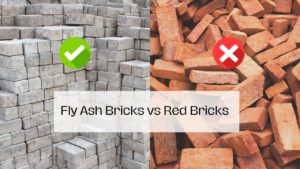
- Fly ash bricks produced under regulated processes
These materials are not about innovation for its own sake. They address one core problem: inconsistency.
By reducing variations in strength, size, and absorption, engineered materials help limit construction durability issues that typically emerge years later. When produced under controlled manufacturing environments and used appropriately, such materials support long-term structural quality rather than short-term convenience.
Why Builders Often Underestimate the Material Decision Stage
Material decisions are often treated as procurement tasks instead of technical decisions. Once rates are finalised and suppliers approved, attention shifts entirely to execution.
This mindset overlooks one critical fact:
Every construction activity depends on material performance.
If materials are inconsistent, even the best labour cannot deliver consistent results. Over time, this leads to repeated building quality problems that seem unexplainable but are actually predictable.
Long-Term Impact of Early Material Choices
Buildings are long-term assets. Their performance over 15–30 years matters more than how they look at completion.
Poor material choices:
- Increase maintenance frequency
- Reduce structural reliability
- Create safety risks in later years
- Lower confidence in building performance
In contrast, correct material decisions made early often go unnoticed — because nothing goes wrong. And that silence is a sign of quality.
Conclusion
Construction failures are rarely sudden. They develop slowly, starting with decisions made long before construction activity begins.
Most quality issues in construction do not originate from labour errors or environmental conditions. They begin at the material decision stage, where choices about sand, aggregates, and bricks quietly determine a building’s future.
Focusing on material consistency, controlled sourcing, and quality verification early in the project can prevent years of cracks, dampness, and repair cycles later.
Choosing the right materials at the planning stage can prevent years of quality issues — and that is where true construction quality really begins.
Long-term construction quality begins with consistent, well-controlled materials chosen at the planning stage. Raj Mineral supports builders and contractors with factory-controlled manufactured sand, properly graded crusher stone grit, and precision-engineered fly ash bricks designed for strength, uniformity, and dependable performance. By prioritising material consistency and reliable production standards, Raj Mineral helps reduce structural uncertainty and supports durable, long-lasting construction outcomes.
Connect with us to discuss your material requirements and ensure your next project starts with strength, stability, and long-term reliability.