Raj Mineral Logo
HomeAbout Us
Plants & ProductsBlogsContact Us
Blogs

Articles and Updates

Insights from Raj Mineral on products, construction materials, and practical site use.

Solid Concrete Block

Blog

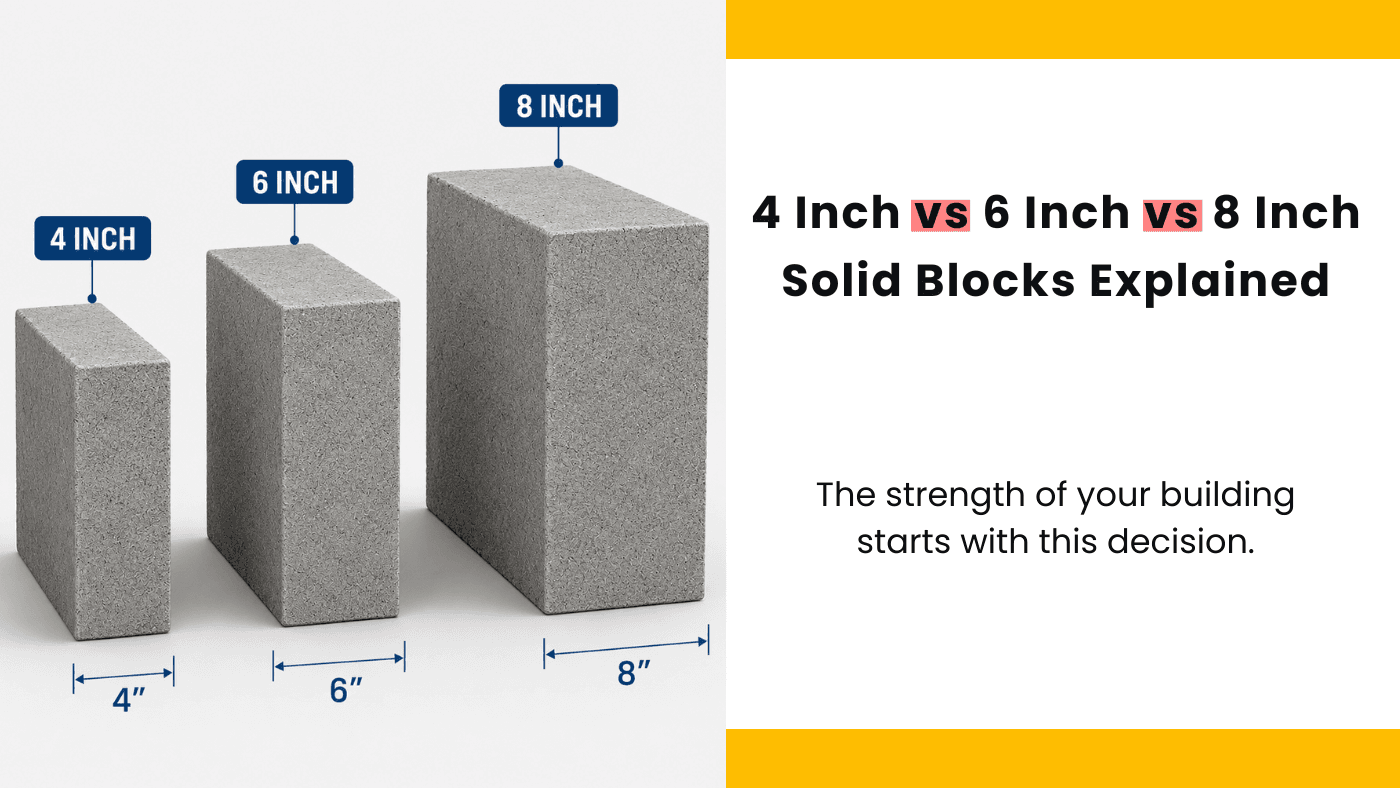
4 Inch vs 6 Inch vs 8 Inch Solid Blocks Explained

Construction Guide · Raj Mineral Choosing the Right Solid Block Size for Every Construction Need A complete size guide to help builders, contractors, and homeowners in Udaipur & Rajasthan choose the right solid concrete block for every application. Solid Concrete Blocks Udaipur, Rajasthan ~6 min read When planning any construction project — whether a house, commercial building, or boundary wall — one of the most critical decisions is choosing the right size of solid concrete block. In India, solid blocks are manufactured in three standard sizes: 4 inches, 6 inches, and 8 inches. Each size has specific structural capabilities, applications, and cost implications. At Raj Mineral, Udaipur, we manufacture high-strength solid concrete blocks in all three sizes using German automated technology. This guide will help you understand the exact difference between each size so you can make a confident, informed decision for your project in Rajasthan. ⚡ Quick Answer 4-inch solid blocks are for interior partition walls. 6-inch solid blocks are best for exterior walls and standard residential construction (G+1, G+2). 8-inch solid blocks are for heavy load-bearing walls, industrial structures, and buildings above G+2. All sizes are manufactured as per IS 2185 (Part 1) — the Bureau of Indian Standards specification for solid concrete masonry units. What Are Solid Concrete Blocks (Cemented Solid Blocks)? Solid concrete blocks — also called cemented solid blocks — are dense, load-bearing masonry units manufactured from a compressed mixture of cement, sand, and aggregates. Unlike hollow blocks, they have no internal cavities, making them significantly stronger and more suitable for structural applications. Conforming to IS 2185 standards, these blocks are widely used across Udaipur, Rajasthan, and throughout India for residential, commercial, and industrial construction. View Raj Mineral’s Cemented Solid Blocks → 4″ 4 Inch Solid Blocks — Partition & Light Walls The 4-inch solid block is the thinnest in the range and is primarily used for interior partition walls and non-load-bearing structures. While it still offers greater strength than a standard brick, it is not recommended for walls that carry floor or roof loads. Best Used For: Interior partition walls between rooms Bathroom and toilet divider walls Compound wall infill panels (non-structural) Shop fit-outs and office interiors ⚡ Key Advantage: Lightweight compared to 6″ and 8″ blocks, which reduces the dead load on slabs — ideal for multi-storey buildings where floor weight needs to be minimized. 6″ 6 Inch Solid Blocks — The Most Versatile Choice The 6-inch solid concrete block is the most popular size among builders in Udaipur and across Rajasthan. It strikes the ideal balance between structural strength and construction efficiency. These blocks can handle medium load-bearing applications and are used in the majority of G+1 and G+2 residential constructions. Best Used For: Exterior walls of residential homes (G+1, G+2) Commercial building perimeter walls Boundary walls requiring moderate strength Basement and plinth-level construction ✅ Key Advantage: Excellent compressive strength for typical residential construction while being cost-effective. Contractors in Rajasthan widely prefer this size for ground-floor and first-floor walls. 8″ 8 Inch Solid Blocks — Maximum Strength & Stability The 8-inch solid block is the heaviest and strongest option, designed for high load-bearing walls, foundations, industrial structures, and heavy-duty applications. It provides the highest compressive strength and is the go-to choice when structural integrity is non-negotiable. Best Used For: Load-bearing walls in G+3 and above buildings Factory floors and industrial shed walls Retaining walls and foundation construction Warehouses, godowns, and heavy commercial spaces 🏗️ Key Advantage: Provides maximum thermal mass and structural strength. Ideal for Rajasthan’s hot climate as thicker walls significantly reduce indoor temperatures, saving cooling costs. Quick Comparison: 4″ vs 6″ vs 8″ Solid Blocks Feature 4 Inch 6 Inch 8 Inch Load Bearing Capacity Low Medium–High Very High Wall Application Partition Exterior / Structural Heavy Structural Sound Insulation Moderate Good Excellent Thermal Insulation Low Moderate High Cost (per block approx.) Lowest Medium Higher Typical Use Case Interior Walls Homes, Offices Industrial, High-Rise Which Solid Block Size Should You Choose? Here’s a simple decision framework used by experienced contractors in Udaipur and Rajasthan: Choose 4 Inch if you are building interior partition walls, bathroom dividers, or any non-load-bearing wall inside your home or office. This saves cost and reduces slab load. Choose 6 Inch for exterior walls, boundary walls, and standard residential or commercial construction up to G+2. It is the most cost-effective structural option for most projects in Rajasthan. Choose 8 Inch for high-rise buildings (G+3 and above), industrial construction, retaining walls, or any project where heavy structural loads, extreme weather, or maximum durability are priority requirements. Why Source Solid Blocks from Raj Mineral, Udaipur? Raj Mineral is a trusted solid blocks manufacturer in Udaipur, Rajasthan, with over 35 years of industry experience. Our cemented solid blocks are produced using German automated technology and conform to IS 2185 (Part 1) standards — ensuring consistent dimensions, high compressive strength, and uniform quality in every block. We supply across Udaipur, Rajsamand, Chittorgarh, Bhilwara, Nathdwara, and all districts of Rajasthan. Available in 4″, 6″, and 8″ — IS 2185 (Part 1) compliant Custom sizes available for bulk project orders Fully automated manufacturing — zero manual inconsistencies Fire-resistant, weather-resistant, and thermally efficient Fast delivery within Udaipur and across Rajasthan 📖 Also read: Fly Ash Bricks vs Cemented Bricks — Understanding the Differences  |  View Cemented Solid Blocks — Product Page Frequently Asked Questions Q: What is the current price of 6-inch solid blocks in Udaipur and nearby areas? A: The cost of 6-inch solid concrete blocks in Udaipur, Rajsamand, Chittorgarh, and Bhilwara typically ranges between ₹50–₹65 per block, depending on quantity, delivery location, and current market rates. Bulk orders of 5,000+ blocks qualify for discounted pricing. For exact current pricing in your area, contact Raj Mineral at +91 94141 69137 or visit our pricing page — we provide transparent quotes within 2 hours. Q: What is the compressive strength of Raj Mineral’s 6-inch and 8-inch solid blocks? A: Raj Mineral’s solid concrete blocks are manufactured to exceed IS 2185 (Part 1) standards.

Editor
Solid Concrete Blocks

Blog

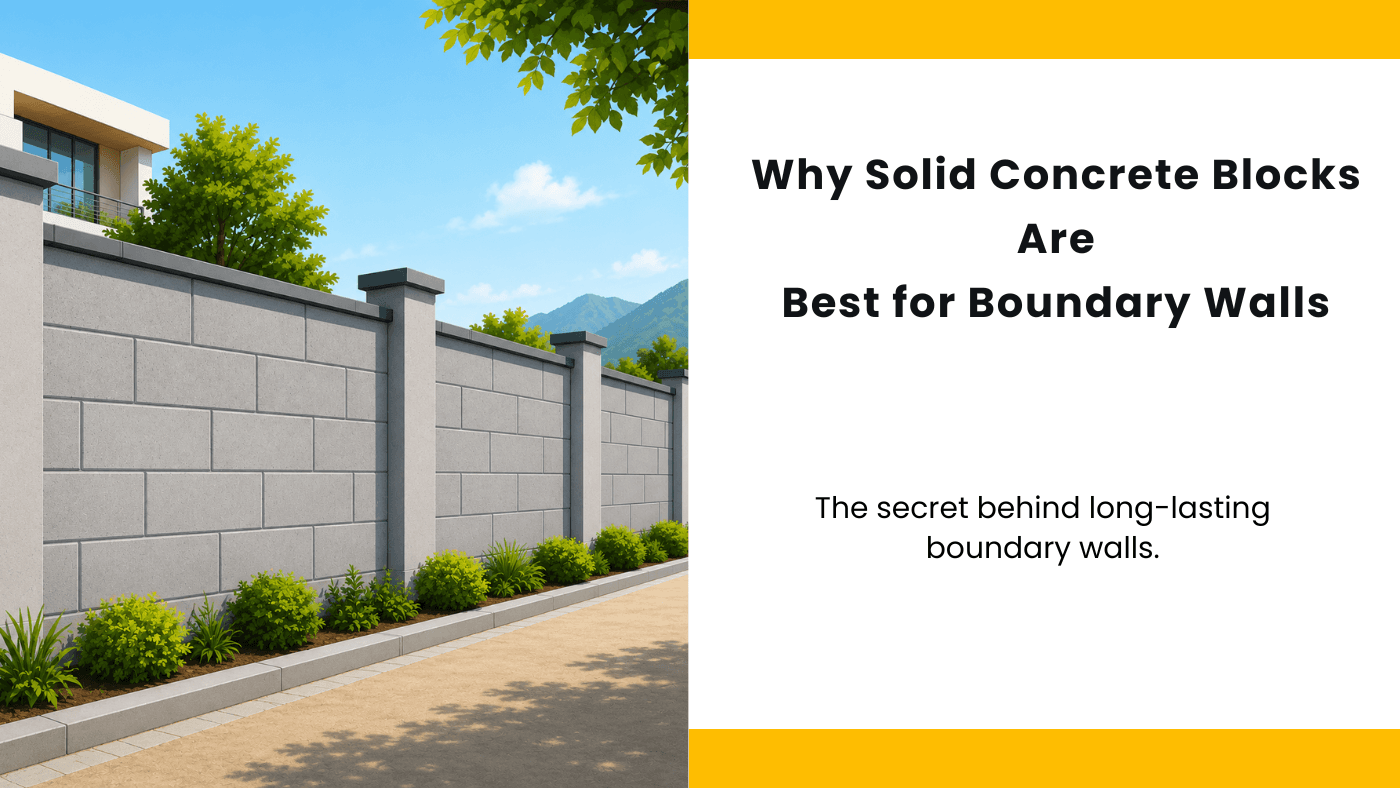
Why Solid Concrete Blocks Are Best for Boundary Walls

Construction Guide · Raj Mineral The Secret Behind Durable Boundary Walls A detailed guide for homeowners and contractors in Udaipur & Rajasthan on why solid blocks outperform every other material for compound and boundary wall construction. Boundary Walls Udaipur, Rajasthan ~6 min read A boundary wall — also called a compound wall — is one of the most important structural elements of any property, whether residential, commercial, or industrial. It defines the perimeter, provides security, and protects the property from weather, intrusion, and encroachment. Yet many property owners across Rajasthan make the mistake of using inferior or mismatched materials, leading to cracks, collapse, and costly repairs within just a few years. If you are constructing or renovating a boundary wall or compound wall in Udaipur or anywhere in Rajasthan, solid concrete blocks are the smartest material choice. Here is a detailed breakdown of why — backed by structural logic, practical experience, and the real-world challenges of construction in Rajasthan’s climate. ⚡ Quick Answer Solid concrete blocks are the best material for boundary and compound walls because they offer higher compressive strength (5–15 N/mm² per IS 2185), superior weather resistance in Rajasthan’s extreme climate, faster construction speed, and minimal maintenance over a 25–30 year lifespan — outperforming both clay bricks and fly ash bricks on all key parameters. For standard residential compound walls in Udaipur, a 6-inch solid block is the most recommended size. What Makes a Good Boundary / Compound Wall Material? Before comparing materials, it is important to understand what a boundary or compound wall must deliver: structural strength to resist lateral pressure and wind loads, weather resistance to survive Rajasthan’s monsoons and dry summers, low maintenance over a 20–30 year lifespan, and cost-effectiveness for the property owner. Solid concrete blocks — manufactured as per IS 2185 (Part 1) standards — tick every one of these boxes. Explore Raj Mineral’s Solid Blocks → 6 Reasons Solid Concrete Blocks Are Best for Boundary Walls 01 Superior Compressive Strength Solid concrete blocks have significantly higher compressive strength than traditional clay bricks or fly ash bricks — typically ranging from 5 to 15 N/mm², depending on grade. For a boundary wall that must withstand lateral wind pressure, soil pressure (in sloped properties), and occasional impacts, this density matters enormously. A wall built with solid blocks is structurally robust from day one. 02 Excellent Weather Resistance — Ideal for Rajasthan’s Climate Rajasthan experiences some of the most extreme weather conditions in India — scorching summers with temperatures above 45°C, dry dusty winds, and sudden heavy monsoon rains. Solid concrete blocks are engineered to handle this entire spectrum. Their dense, non-porous structure resists water absorption, preventing the moisture-related swelling and cracking that commonly damages brick boundary walls within 5–8 years. In the dry heat of Udaipur, solid blocks do not shrink, warp, or lose structural integrity. 03 Faster Construction, Less Labour Cost Solid concrete blocks are significantly larger than standard clay or fly ash bricks — a single 6 inch solid block covers the area equivalent of approximately 6 to 8 bricks. This means walls go up faster, mortar usage is reduced, and labour hours are cut by a meaningful margin. For long perimeter boundary walls — especially in industrial plots, farmhouses, and large residential properties common in Rajasthan — this translates to direct savings on labour and construction time. 04 Long-Term Durability — Zero or Minimal Maintenance One of the most underrated advantages of solid blocks is their near-zero maintenance requirement over a 25–30 year lifespan. Traditional brick walls develop cracks from mortar joint failures, moisture ingress, and thermal expansion. Solid block walls, due to their uniform shape and high-density composition, exhibit far fewer joint failures and surface defects over time. Once built correctly, a solid block boundary wall in Udaipur requires very little attention beyond standard plastering and painting cycles. 05 Fire Resistance for Added Safety Boundary walls are not just about property demarcation — they are a critical fire containment barrier. In industrial zones, warehouses, and densely built urban areas of Rajasthan, a solid block boundary wall acts as an effective firewall. Concrete blocks are inherently non-combustible and can withstand extremely high temperatures, significantly slowing the spread of fire from one property to another. This is a safety feature that many property owners overlook during material selection. 06 Uniform Shape for a Clean, Professional Finish Raj Mineral’s solid blocks are manufactured using fully automated German technology, which ensures every block has identical dimensions, smooth surfaces, and consistent density. This geometric precision results in straight, well-aligned walls that require less plaster to achieve a flat finish. For boundary walls where aesthetics also matter — such as villa compounds, hotels, resorts, and commercial properties in Udaipur — the clean finish of machine-made solid blocks is a significant advantage over hand-made bricks. Solid Blocks vs Bricks for Boundary Walls: A Direct Comparison Parameter Solid Concrete Blocks Clay / Fly Ash Bricks Compressive Strength Very High (5–15 N/mm²) Moderate (2–5 N/mm²) Weather Resistance Excellent Moderate Construction Speed Fast (larger unit size) Slower Maintenance Over 20 Years Very Low Moderate to High Fire Resistance High Moderate Dimensional Consistency Excellent (machine-made) Variable Long-Term Cost Lower (fewer repairs) Higher over time Which Solid Block Size for Boundary Walls? For most residential boundary walls in Udaipur — up to 8 feet height — the 6 inch solid concrete block is the recommended choice. It provides adequate structural strength, is cost-effective, and is easier to handle during construction. For industrial compound walls, tall boundary walls (above 8 feet), or walls in areas with high wind exposure or soil pressure, upgrading to the 8-inch solid block is strongly advisable. Always consult your civil engineer for site-specific recommendations before finalising the material and thickness. Solid Blocks for Boundary & Compound Walls in Udaipur — Supplied by Raj Mineral Raj Mineral is a leading solid concrete blocks manufacturer in Udaipur, Rajasthan, with over 35 years of experience. Our cemented solid blocks comply with IS 2185 (Part 1) standards and are manufactured using fully automated German

Editor
Microstructure of Fly Ash Bricks

Blog

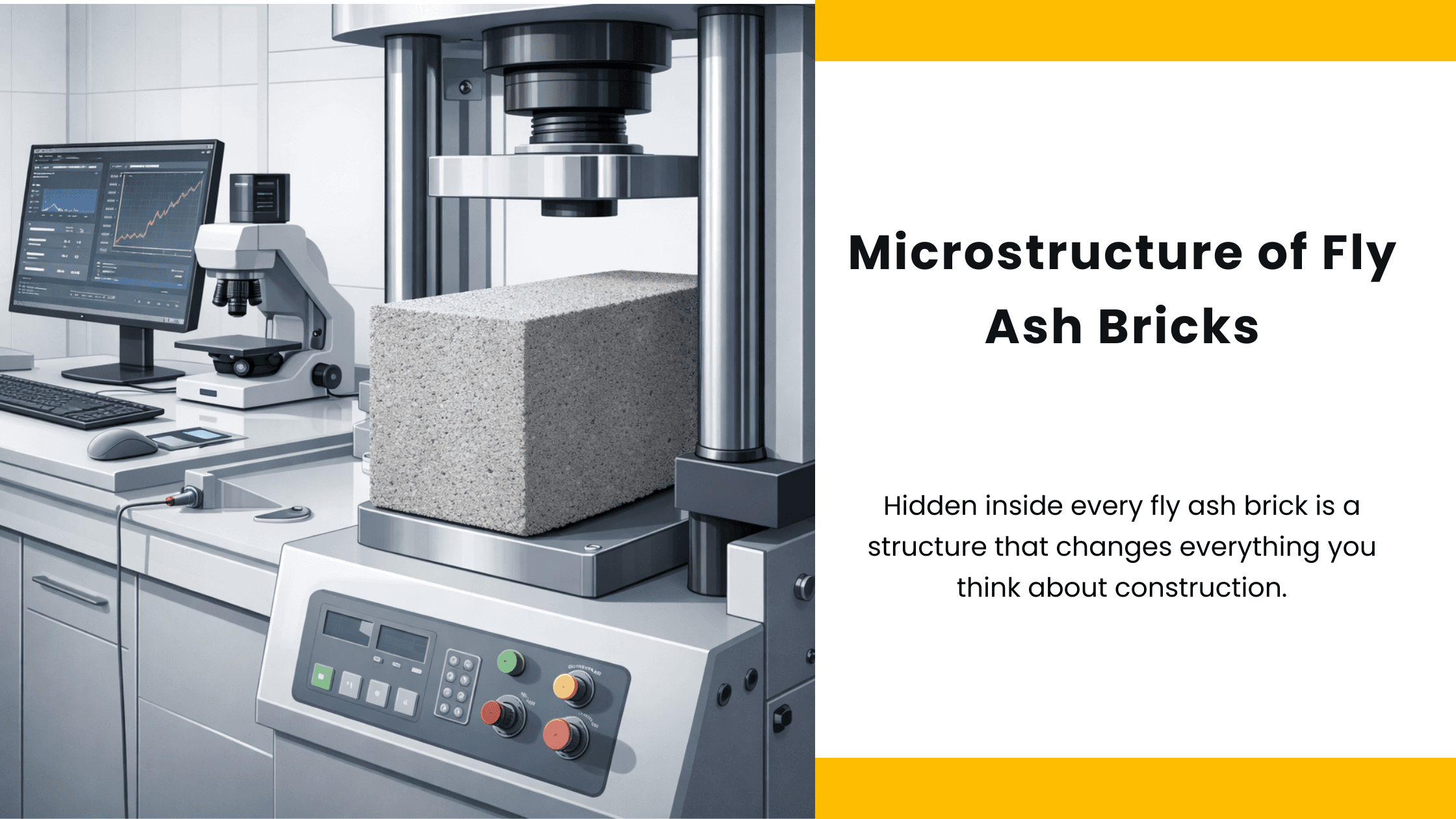
Microstructure of Fly Ash Bricks

🔬 CUTTING-EDGE ANALYSIS Advanced Analysis of Fly Ash Brick Structure Electron Microscopy Analysis for Modern Sustainable Construction By Raj Mineral – Leading Construction Material Innovators 📐 The construction industry is witnessing a paradigm shift toward sustainable building materials, and the microstructure of fly ash bricks is at the forefront of this revolution. As environmental concerns mount and natural resources deplete, fly ash bricks have emerged as an eco-friendly alternative that doesn’t compromise on quality or durability. ♻️ Eco-Friendly Innovation Transforms power plant byproducts into high-performance building materials, reducing waste and environmental impact. 🔬 Advanced Analysis Electron microscopy reveals microstructural properties invisible to traditional testing methods. 💪 Superior Durability Exceptional resistance to chemical attack, weathering, and moisture penetration for long-lasting structures. ✅ Quality Assured Rigorous testing and electron microscopy analysis ensure consistent quality and compliance with international standards. Understanding Fly Ash Bricks: A Sustainable Construction Solution Fly ash bricks are manufactured from fly ash—a byproduct of thermal power plants—combined with lime and other binding materials. These bricks represent a significant breakthrough in sustainable construction, transforming industrial waste into high-performance building materials. The microstructure of fly ash bricks determines their mechanical properties, durability, and long-term performance, making detailed analysis crucial for quality assurance and structural reliability. Unlike traditional clay bricks, fly ash brick microstructure benefits from the pozzolanic properties of fly ash, which enhance the material’s strength and durability over time. The careful composition and manufacturing process create a dense, uniform structure that outperforms conventional bricks in many applications. The Role of Electron Microscopy in Analyzing Fly Ash Brick Structure What is Electron Microscopy Analysis? Electron microscopy analysis represents a sophisticated technique for examining the microstructure of fly ash bricks at incredibly high magnifications—often revealing details invisible to conventional optical microscopes. This advanced imaging technology provides unprecedented insights into the internal composition, pore structure, and particle arrangement within the material. There are two primary types of electron microscopy used in construction material analysis: Scanning Electron Microscopy (SEM): Provides detailed surface and cross-sectional views of fly ash brick microstructure Transmission Electron Microscopy (TEM): Enables analysis of internal crystal structures and mineral phases Why Electron Microscopy Analysis Matters for Fly Ash Bricks The electron microscopy analysis of fly ash bricks reveals critical information about: Pore distribution and size affect water absorption and durability Particle bonding and interfacial zones determining mechanical strength Phase composition validating the pozzolanic reaction Crack propagation patterns predicting long-term structural performance Degree of hydration ensuring material maturity Detailed Microstructural Characteristics of Fly Ash Bricks 1 Pore Structure and Density One of the most significant findings from electron microscopy analysis is the superior pore structure of fly ash bricks compared to traditional clay bricks. The microstructure exhibits refined pore size distribution with predominantly small, well-distributed pores, lower total porosity leading to improved durability and reduced water absorption, and enhanced compactness throughout the brick matrix, contributing to superior strength. These characteristics directly result from the pozzolanic reaction between fly ash particles and calcium hydroxide, creating a denser, more homogeneous fly ash brick microstructure over time. 2 Particle Morphology and Distribution Electron microscopy analysis reveals that fly ash particles within the brick demonstrate irregular spherical morphology from the original fly ash particles, uniform distribution throughout the binding matrix, strong interfacial bonds between fly ash particles and the cement/lime matrix, and minimal void spaces indicating effective particle packing. This exceptional particle arrangement contributes significantly to the mechanical properties and durability of fly ash bricks in high-rise construction and other demanding applications. 3 Hydration Products and Phase Composition Advanced electron microscopy analysis identifies the hydration products within fly ash brick microstructure, including Calcium Silicate Hydrate (C-S-H) gel – the primary strength-contributing phase, Calcium Hydroxide (CH) crystals – evidence of ongoing pozzolanic reactions, Unreacted fly ash particles – demonstrating the gradual strength development, and Secondary minerals – formed through long-term curing processes. The presence of well-developed C-S-H gel throughout the microstructure of fly ash bricks explains their excellent long-term strength gain and durability characteristics. Advantages Revealed Through Electron Microscopy Analysis 🛡️ Superior Durability Properties Electron microscopy analysis confirms that the microstructure of fly ash bricks provides exceptional resistance to chemical attack from sulfates and chlorides, weathering and freeze-thaw cycles, moisture penetration due to refined pore structure, and efflorescence minimized by the stable phase composition. ⚡ Enhanced Mechanical Performance The detailed examination of fly ash brick microstructure through electron microscopy analysis demonstrates higher compressive strength development over time, improved tensile strength due to strong interfacial bonds, better crack resistance from uniform internal structure, and lower shrinkage compared to conventional bricks. 🌍 Sustainability and Environmental Benefits Beyond structural advantages, electron microscopy analysis validates the environmental credentials of fly ash bricks through waste material utilization, reducing landfill burden, lower carbon footprint compared to clay brick manufacturing, energy efficiency in production processes, and long service life, minimizing replacement and waste. Applications of Fly Ash Bricks in Modern Construction 🏢 High-Rise Building Construction The superior properties revealed by electron microscopy analysis make fly ash bricks ideal for load-bearing walls in multi-story buildings, structural applications requiring consistent quality, seismic-resistant construction, and long-span structural elements. 🏗️ Specialized Construction Projects Fly ash brick microstructure analysis has validated its use in coastal construction (excellent salt resistance), industrial facilities (chemical resistance), infrastructure projects (durability under stress), and green building certifications (LEED compliance). 🔍 Quality Assurance Through Electron Microscopy Analysis Modern manufacturers utilize electron microscopy analysis as a quality control tool to ensure consistency of microstructure batch to batch, optimal hydration development before delivery, compliance with specifications for specific applications, and detection of defects before materials reach construction sites. This rigorous analysis ensures that every fly ash brick meets the stringent requirements of contemporary construction standards. 🚀 The Future of Fly Ash Brick Technology As electron microscopy technology advances, researchers continue to uncover new insights into fly ash brick microstructure. Future developments include AI-powered microscopy analysis for real-time quality monitoring, enhanced fly ash processing improving pozzolanic reactivity, hybrid brick compositions combining multiple waste materials, and smart bricks with embedded sensors monitoring structural health. Final Insights The microstructure

Editor
M Sand for High Rise Building Construction

Blog

🏢 M Sand for High Rise Building Construction

M-Sand: The Smart Choice for High-Rise Construction The Future of Sustainable & Durable Construction Materials 📌 Introduction: M-Sand for High-Rise Buildings The use of manufactured sand (M-sand) for high-rise building construction has catalyzed a revolutionary transformation in the construction industry. As urbanization accelerates and natural sand reserves dwindle, M-sand has emerged as the indispensable alternative for constructing towering structures with enhanced durability and superior performance. This comprehensive guide explores how manufactured sand in high-rise construction is fundamentally reshaping modern construction methodologies, architectural design, and engineering practices for today’s urban landscape. 🔍 What is M-Sand? Understanding Manufactured Sand Definition and Composition of M-Sand M-sand (Manufactured Sand) is artificially produced sand created by crushing granite rocks and other mineral aggregates to specific particle sizes. Unlike natural river sand, manufactured sand for construction is engineered to meet strict quality standards and specifications. The crushed sand particles have angular shapes, which provide superior binding properties compared to naturally weathered sand. ⚙️ How M-Sand is Produced The production of M-sand in construction projects involves three essential stages: ✓ Rock Crushing – Granite and other durable rocks are crushed in industrial crushers ✓ Washing and Classification – The crushed material is washed to remove dust and classified by particle size ✓ Quality Testing – The final product undergoes rigorous laboratory testing to meet construction standards 💪 Why M-Sand is Essential for High-Rise Building Construction Superior Strength & Durability The angular particles of M-sand for high-rise buildings interlock more effectively, creating stronger concrete bonds. This characteristic is crucial for constructing buildings with enhanced structural performance. 🌱 Sustainable Alternative M-sand as an eco-friendly solution reduces environmental damage while meeting the growing demands of modern construction projects. It protects river ecosystems and reduces ecological imbalance. ⭐ Advantages of M-Sand in High-Rise Construction 🔨 Enhanced Concrete Compressive Strength Studies demonstrate that concrete made with manufactured sand achieves 20-40% higher strength compared to natural sand. This ensures safer, more durable structures with less maintenance. 💧 Improved Water Resistance The particle gradation creates a denser concrete matrix, significantly improving water resistance. This extends the building’s lifespan and reduces costly repairs. 🎯 Better Workability & Consistency Consistent particle size distribution ensures uniform concrete mixing and application, eliminating variations that occur with natural sand. 💰 Cost Efficiency Manufactured sand is more economical than natural alternatives, especially for massive construction projects requiring thousands of tons of aggregates. ✨ Reduced Segregation & Bleeding High-performance concrete with M-sand exhibits minimal segregation and bleeding issues, resulting in superior concrete quality and faster setting times. 🌍 Environmental Protection Eliminates destructive river mining operations, protecting aquatic ecosystems and conserving groundwater resources. ⚖️ M-Sand vs Natural Sand: A Detailed Comparison Aspect M-Sand Natural Sand Source Manufactured from rocks River beds and quarries Particle Shape Angular & uniform Rounded & irregular Compressive Strength Higher (20-40% more) Lower Water Content Minimal (0-1%) Variable (2-5%) Durability Superior Moderate Environmental Impact Sustainable ✓ Depletes ecosystems ✗ Cost Economical Variable & rising Consistency Highly consistent Inconsistent ✅ Quality Standards and Specifications for M-Sand IS 383:2016 Compliance M-sand for construction must comply with Indian Standard IS 383:2016, which specifies: Fineness Modulus: Between 2.5 to 3.0 Silt and Clay Content: Maximum 5% Crushing Value: Not more than 30% Particle Size: Well-graded particles 🧪 Testing and Quality Assurance Before using M-sand in high-rise construction projects, comprehensive testing ensures: ✓ Sieve analysis for particle gradation ✓ Compressive strength tests on concrete samples ✓ Water absorption tests ✓ Soundness and durability tests ✓ Chemical composition analysis 🎯 How M-Sand Improves Building Performance 🏗️ Enhanced Structural Integrity Buildings constructed with M-sand for structural applications demonstrate superior load-bearing capacity and stability. The engineered sand properties create stronger bonds between cement and aggregates. ⚡ Reduced Construction Time The consistency and workability of M-sand in construction accelerate the concrete curing process. Fast-setting concrete allows construction teams to maintain aggressive project schedules. 🛡️ Longevity and Reduced Maintenance High-rise buildings constructed with M-sand require significantly less maintenance. The improved durability reduces repair costs and extends the building’s lifespan to 50+ years. 🌍 Environmental and Sustainability Benefits ♻️ Eco-Friendly Construction Solutions The adoption of sustainable M-sand addresses critical environmental challenges. By eliminating destructive river mining, manufactured sand benefits: 🌊 River Ecosystems Protects aquatic habitats 🌱 Soil Conservation Maintains soil fertility 💧 Groundwater Conserves water reserves 🦋 Biodiversity Protects wildlife habitats 🔨 M-Sand Applications in High-Rise Construction Load-Bearing Structures Pillars, beams, and slabs Reinforced Concrete RCC construction for durability Foundation Work Deep foundations and piles Precast Elements Prefabricated components ✨ Conclusion: The Future of M-Sand in Construction M-sand for high-rise building construction represents the future of sustainable, durable, and cost-effective development. As cities expand vertically and environmental concerns intensify, manufactured sand solutions provide the optimal balance between performance, sustainability, and economy. By adopting M-sand in modern construction projects, builders ensure stronger structures, faster construction timelines, and reduced environmental impact. ❓ Frequently Asked Questions (FAQs) 📌 Is M-Sand as Strong as Natural Sand for High-Rise Buildings? Yes, M-sand is significantly stronger than natural sand for high-rise construction. Studies show that concrete made with M-sand achieves 20-40% higher compressive strength compared to natural sand. The angular particle shape creates superior interlocking and bonding with cement, making it ideal for demanding high-rise applications. This enhanced strength ensures better structural integrity and load-bearing capacity for tall buildings. 💰 What is the Cost Difference Between M-Sand and Natural Sand? M-sand is generally 15-25% more cost-effective than natural sand in most regions. While initial material costs may vary, manufactured sand reduces overall project costs through reduced transportation, eliminated mining permits, and faster construction timelines. For large-scale projects requiring thousands of tons of sand, the savings become substantial. 🔧 Can M-Sand Be Used for All Types of Construction Work? Yes, M-sand can be used for virtually all construction applications. From load-bearing structures and RCC construction to finishing work and plaster, manufactured sand serves multiple purposes. For specific applications like concrete blocks, always verify compliance with relevant IS codes and project specifications before procurement. 🌍 How Does M-Sand Impact Environmental Sustainability? M-sand significantly improves environmental sustainability

Editor
low quality sand in construction || poor quality sand in construction || problems caused by low quality sand || how to identify good quality sand

Blog

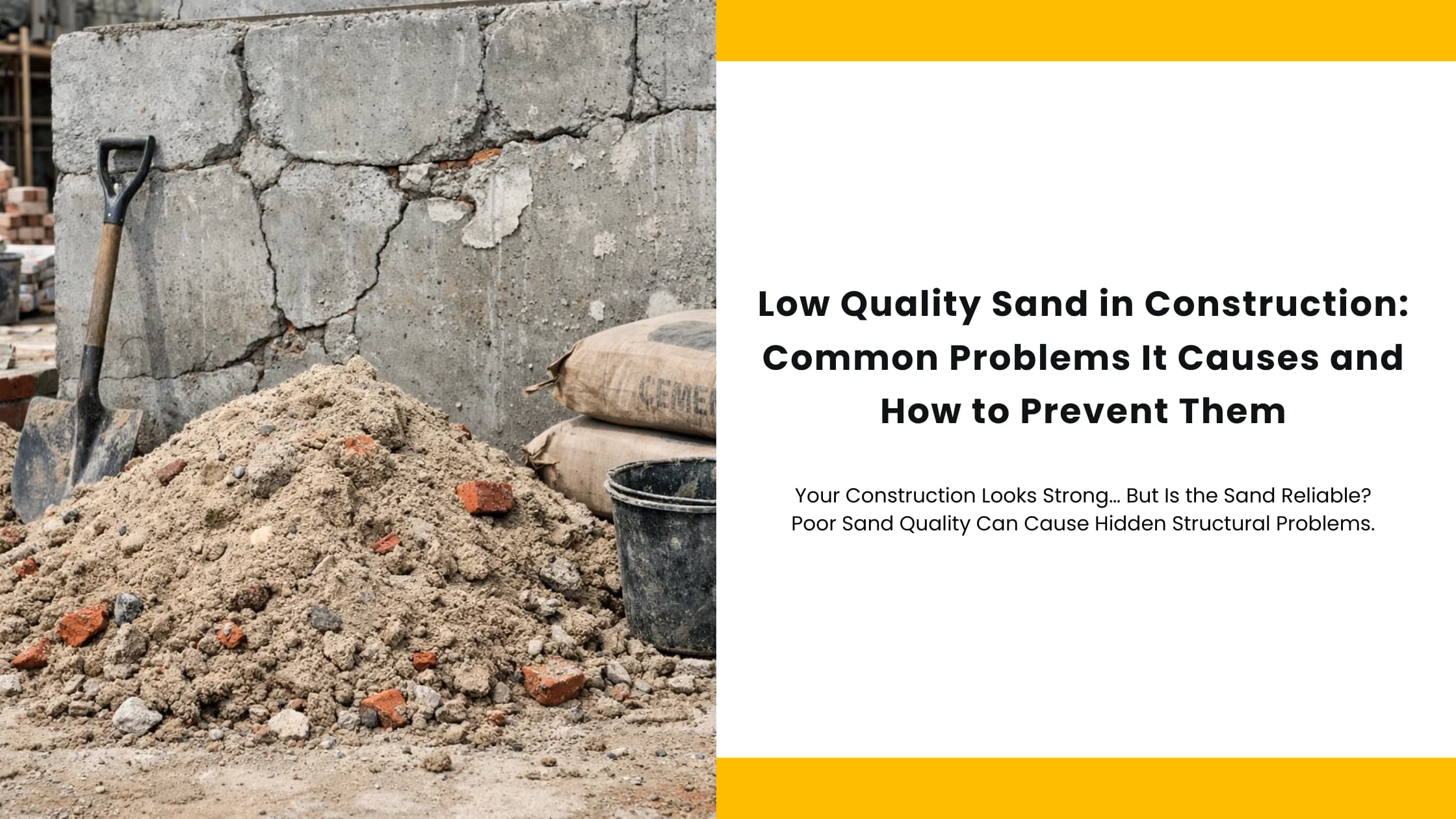
Low Quality Sand in Construction: Common Problems It Causes and How to Prevent Them

Sand is one of the most essential materials used in building construction. It plays a critical role in preparing concrete, mortar, plaster, and other structural elements that hold a building together. While cement and steel often receive more attention, the sand quality in construction is equally important for ensuring durability and structural strength. Unfortunately, many construction projects unknowingly use low quality sand in construction, which can lead to serious long-term problems. Poor sand quality may contain impurities, excessive dust, clay particles, or uneven grain sizes that weaken the bond between materials. Over time, this can cause cracks in walls, reduced concrete strength, and costly repairs. Understanding the problems caused by low quality sand and learning how to identify good sand before using it can help builders, contractors, and homeowners avoid structural issues and ensure that buildings remain strong and safe for many years.   What is Low Quality Sand in Construction? In simple terms, low quality sand in construction refers to sand that does not meet the required standards for building work. Construction sand must have the right particle size, minimal impurities, and proper grading to create strong bonds with cement and aggregates. Sand becomes unsuitable for construction when it contains the following: Excessive Clay Content Clay particles prevent proper bonding between cement and sand. This weakens mortar and reduces overall strength. Too Much Dust or Silt High dust content interferes with cement hydration and reduces the effectiveness of the mixture. Organic Impurities Materials like leaves, roots, or decomposed organic matter can damage the structural integrity of concrete. Irregular Particle Size If the grains are too fine or uneven, the mixture may not achieve proper compaction. These characteristics are often found in poor quality sand in construction, especially when materials are sourced from unreliable suppliers or unregulated locations.   Common Problems Caused by Low Quality Sand in Construction Using low quality sand in construction can create multiple issues during and after the building process. Some of the most common problems include the following. 1. Weak Concrete Strength Concrete relies on a proper balance of cement, sand, and aggregates. If the sand contains impurities or excessive dust, the mixture becomes weaker. This reduces load-bearing capacity and increases the risk of structural failure. One of the major effects of bad sand in construction is that concrete may fail to achieve the designed compressive strength. 2. Cracks in Walls and Plaster Walls and plaster surfaces may begin to crack if sand quality is poor. Clay and silt particles prevent proper bonding with cement, which results in weak plaster layers that crack or peel over time. These cracks not only affect appearance but may also allow moisture to enter the structure. 3. Poor Bonding in Mortar Mortar is used to bind bricks or blocks together. If the sand contains too many impurities or inconsistent particles, it weakens the bond between construction materials. This can result in unstable masonry and reduced durability of walls. 4. Structural Durability Issues Buildings constructed with poor quality sand in construction may experience long-term durability problems. Over time, weak concrete and mortar can deteriorate faster under environmental stress such as temperature changes, moisture, and heavy loads. 5. Higher Maintenance and Repair Costs One of the most overlooked problems caused by low quality sand is increased maintenance. Repairs such as crack filling, plaster replacement, or structural reinforcement can significantly increase construction costs in the long run.   How Low Quality Sand Affects Concrete and Building Strength Concrete is designed to provide strength and stability to buildings. The mixture depends on a strong bond between cement paste and sand particles. When low quality sand in construction is used, several issues occur: Cement cannot properly bind with sand particles. Voids and gaps form within the concrete structure. Moisture penetration increases. Concrete strength reduces significantly. The importance of quality sand in concrete becomes clear when considering how it affects load distribution. High-quality sand improves density and compaction, allowing concrete to withstand heavy structural loads. On the other hand, the effects of bad sand in construction include premature deterioration, reduced lifespan of the structure, and potential safety risks.   How to Identify Low Quality Sand Before Construction Before using sand for construction work, it is important to perform simple checks. Knowing how to identify good quality sand can help avoid major structural problems. Visual Inspection Good construction sand should appear clean and free from visible impurities such as clay lumps, organic materials, or debris. If the sand looks excessively muddy or dusty, it may indicate poor quality. Check for Particle Consistency High-quality sand typically contains well-graded particles of different sizes. This ensures proper compaction and bonding with cement. Very fine sand or uneven grains may reduce strength. Simple Field Test A simple field test can be done by placing sand in a glass jar with water and shaking it. If a thick layer of silt or clay settles on top, it indicates poor sand quality. Touch and Feel Test When rubbed between fingers, clean sand should feel gritty and coarse rather than sticky. Sticky sand may contain clay particles. These simple methods help identify sand quality in construction before materials are used in large quantities.   How to Prevent Problems Caused by Low Quality Sand Preventing issues related to low quality sand in construction requires careful material selection and proper quality control. Choose Reliable Construction Materials Materials should always be sourced from reliable suppliers who maintain proper quality standards. Use Properly Graded Sand Well-graded sand ensures better bonding with cement and improved structural strength. Maintain Correct Cement-Sand Ratio The strength of mortar and concrete depends on the right proportion of materials. Using the recommended mix ratio helps maintain durability. Conduct Quality Checks on Site Regular inspection of construction materials ensures that only suitable sand is used during building work. Avoid Unverified Local Sources Sand from unregulated sources may contain high levels of impurities or unsuitable particles. Implementing these measures helps reduce the problems caused by low quality sand and improves the overall quality of

Editor
wall cracks in new house || causes of wall cracks in new house || why cracks appear in walls || how to prevent wall cracks || cracks in walls after construction

Blog

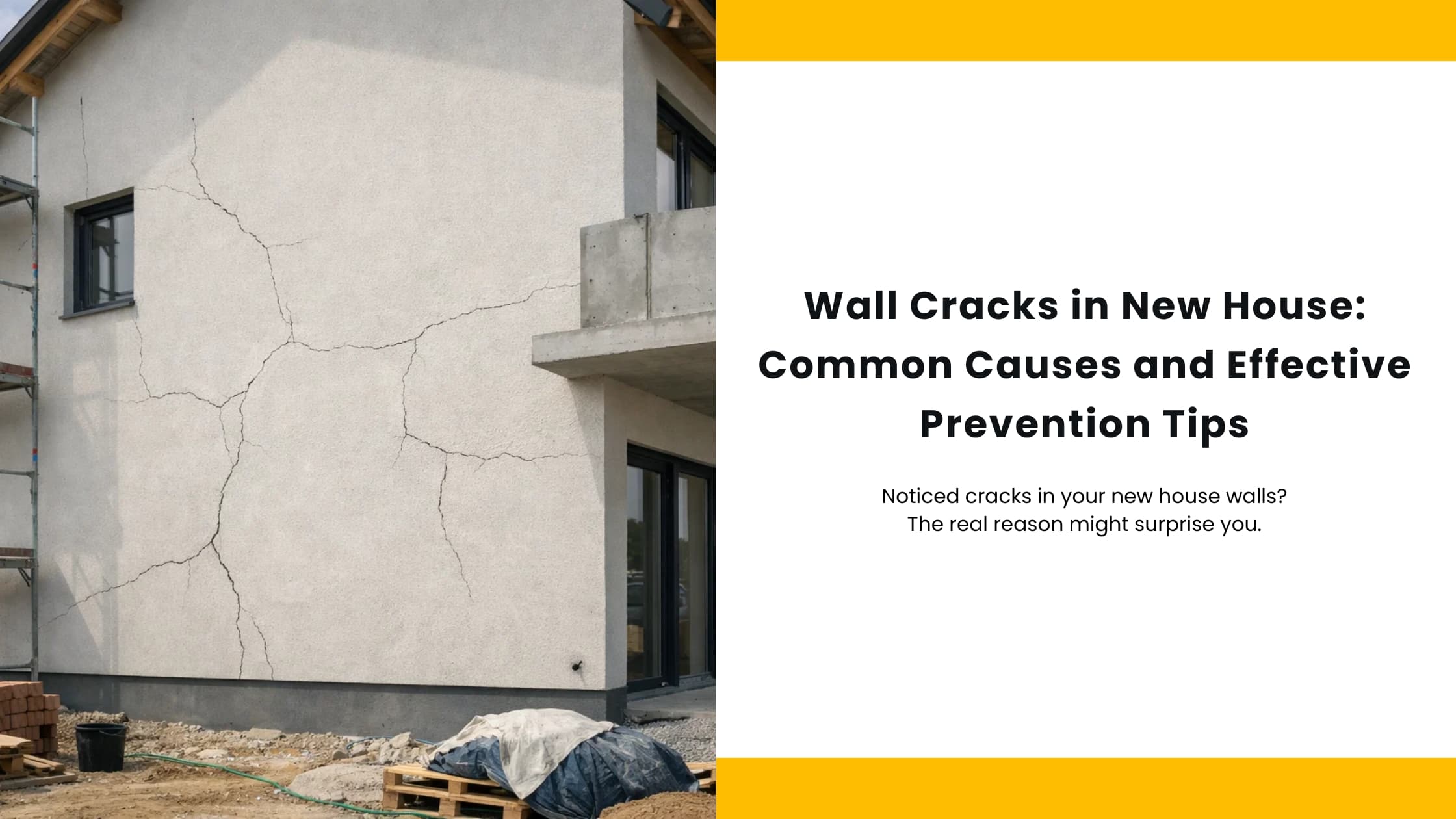
Wall Cracks in New House: Common Causes and Effective Prevention Tips

Noticing wall cracks in new house construction can be surprising and worrying for homeowners. When a home has just been built, most people expect smooth walls and flawless finishes. However, small or even noticeable cracks sometimes appear within months of construction, which can raise concerns about the quality and durability of the building. In many cases, these cracks are not unusual and may result from natural processes such as drying and settling. But in other situations, cracks may indicate issues related to construction practices or material quality. Understanding the causes of wall cracks in new house structures helps homeowners identify whether the cracks are minor cosmetic issues or something that requires attention. By learning why cracks appear in walls and how to prevent them, builders and homeowners can ensure better durability, reduce repair costs, and maintain the long-term stability of the structure.   What Are Wall Cracks in a New House? Wall cracks in new house structures refer to visible lines or gaps that appear on walls after construction is completed. These cracks may appear on plaster surfaces, brick walls, or concrete structures. Although cracks in walls after construction may look alarming, not all cracks indicate structural damage. Many cracks occur due to normal factors such as: Drying and shrinkage of building materials Temperature changes Minor movement in the building structure However, cracks can also develop due to poor construction techniques or the use of weak materials. When the building material quality in construction is compromised, the strength of walls and structural elements can be affected. Understanding the causes behind these cracks helps in identifying the appropriate solution.   Common Causes of Wall Cracks in New House Several factors contribute to the appearance of wall cracks in new house construction. These causes are often related to construction practices, material quality, and environmental conditions. Poor Quality Bricks or Uneven Brick Bonding Bricks form the primary structural component of most residential walls. If low-quality bricks are used or the brick bonding pattern is not properly maintained, the wall may develop weak sections. Uneven brick bonding can create stress points where cracks eventually appear. Using strong and uniform materials such as fly ash bricks helps ensure consistent strength and better alignment in wall construction. These bricks are often preferred because they offer uniform shape, improved durability, and reduced chances of structural cracks. Low-Quality Sand Used in Mortar or Plaster Sand is an essential ingredient in mortar and plaster mixtures. If sand contains impurities, excessive dust, or irregular particle sizes, it may weaken the bonding between cement and bricks. Poor sand quality often leads to cracks in plaster or mortar joints. Using manufactured sand (M-sand) can help improve mortar strength because it provides consistent particle size and better bonding properties. Proper sand grading is an important part of maintaining strong construction materials during the building process. Weak Aggregates in Concrete Aggregates such as stone grit are used in concrete for foundations, columns, and structural elements. If weak or poorly graded aggregates are used, the resulting concrete may lack strength and stability. Over time, this can lead to cracks in walls after construction as the structure experiences stress and load distribution. Using strong aggregates like crusher stone grit improves the strength of concrete and supports better load-bearing capacity in buildings. Improper Curing of Walls and Concrete Curing is the process of maintaining moisture in concrete and mortar to allow proper strength development. If curing is done improperly or for insufficient time, the materials may dry too quickly. Rapid drying can cause shrinkage cracks, especially in plaster and masonry work. Proper curing ensures that cement hydrates fully and develops the necessary strength required for durable construction. Foundation Settlement or Structural Stress Buildings naturally settle over time as the soil beneath them adjusts to the load of the structure. Minor settlement is common, but uneven settlement can lead to stress in walls. This stress can create visible cracks, especially near doors, windows, or corners. Proper soil analysis, foundation design, and structural planning are essential to prevent excessive movement in the building structure.   Types of Wall Cracks Commonly Seen in New Homes Different types of cracks can appear in newly constructed homes. Understanding these types helps determine whether the issue is cosmetic or structural. Hairline Cracks Hairline cracks are very thin cracks that usually appear in plaster surfaces. These are often caused by minor shrinkage during drying and are generally not structurally dangerous. They are common in wall cracks in new house situations and can usually be repaired with simple surface treatments. Vertical Cracks Vertical cracks often appear due to minor settlement or thermal expansion of materials. In most cases, they are not serious but should still be monitored. If these cracks widen over time, they may indicate deeper structural issues. Horizontal Cracks Horizontal cracks can sometimes indicate structural stress, especially if they appear near load-bearing walls. These cracks may result from foundation pressure or poor structural design. Structural Cracks Structural cracks are larger and deeper cracks that affect the stability of the building. These cracks often run diagonally or across multiple structural elements. Such cracks require professional inspection and repair to prevent further damage.   Effective Ways to Prevent Wall Cracks in New Houses Preventing wall cracks in new house construction requires proper planning, high-quality materials, and good construction practices. Use High-Quality Construction Materials The foundation of durable construction begins with using strong and reliable materials. Materials such as: Fly ash bricks for uniform and strong wall construction Manufactured sand (M-sand) for better mortar bonding Crusher stone grit for strong concrete help improve structural strength and reduce the chances of cracks. Ensuring proper building material quality in construction plays a major role in preventing future issues. Maintain Proper Cement-Sand Ratios The strength of mortar and plaster depends on the correct mixture of cement and sand. Improper ratios may weaken the bonding strength and increase the chances of cracks forming in walls. Following recommended mix proportions ensures better durability. Ensure Correct Curing of Walls Proper curing

Editor
construction material quality || Quality Issues in Construction || building quality problems ||material decision stage || construction durability issues

Blog

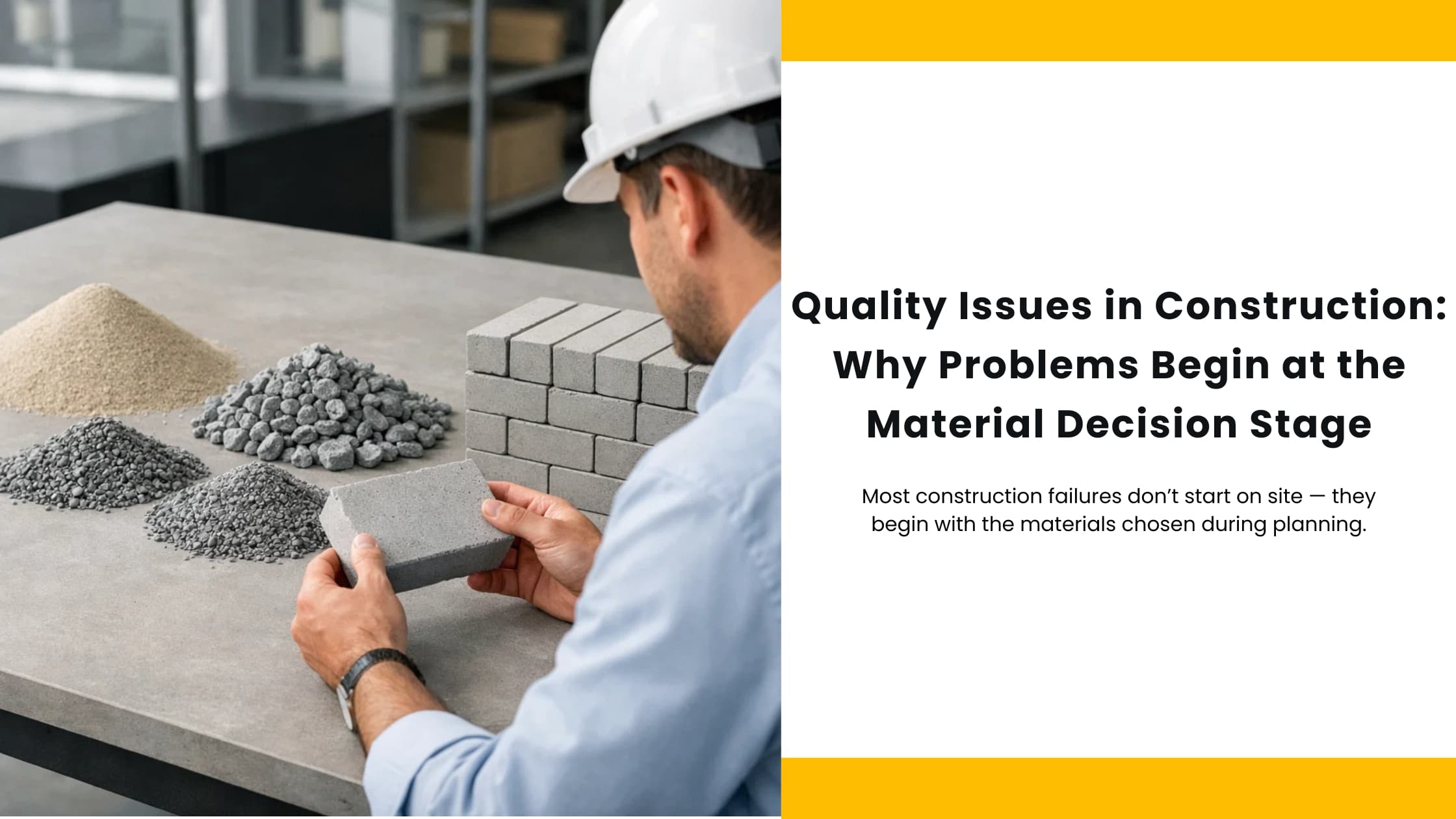
Quality Issues in Construction: Why Problems Begin at the Material Decision Stage

When a building starts developing cracks, damp patches, or early surface damage, the blame usually falls on visible factors. Labour quality is questioned. Weather conditions are discussed. Execution methods are criticised. While these factors do play a role, they are rarely the starting point of construction failures. In reality, most quality issues in construction begin much earlier — often before the first brick is laid or the first batch of concrete is poured. The root cause usually lies in decisions made quietly during planning, specifically at the material decision stage. This stage does not receive much attention, yet it shapes the long-term health of the entire structure.   What Are Quality Issues in Construction? Quality issues are not sudden events. They appear gradually and often worsen over time. Common building quality problems include: Cracks in walls, slabs, and beams Reduced structural strength Dampness, seepage, and moisture retention Frequent repairs and patchwork fixes Shortened building life and loss of structural reliability These problems are usually treated as isolated defects. In reality, they are symptoms, not the disease itself. When the same issues repeat across multiple projects, it becomes clear that the problem is systemic — rooted in construction material quality, not just site execution.   The Material Decision Stage Explained The material decision stage is the phase where core construction inputs are selected, finalised, and approved. This includes materials such as: Sand for concrete and plaster Aggregates and stone grit Bricks and masonry units These decisions are often made early, sometimes based on availability, cost pressure, or habit. Once construction begins, changing materials becomes difficult, expensive, and disruptive. This is why mistakes made at this stage tend to follow the building throughout its life. Unlike workmanship issues, material-related errors cannot be easily corrected later. They become embedded into the structure.   How Poor Material Decisions Lead to Construction Quality Problems Material failures rarely show immediate dramatic effects. Instead, they weaken the structure quietly and progressively. Inconsistent Sand Leading to Weak Concrete Sand with uncontrolled particle size or excessive impurities affects concrete strength. Even with proper mixing and curing, inconsistent sand reduces bonding efficiency, leading to long-term strength loss. Incorrect Aggregate Grading Causing Cracks and Load Issues Aggregates that lack proper grading create voids in concrete. These voids increase stress concentration, resulting in cracks under normal load conditions. Low-Quality Bricks Causing Wall and Plaster Damage Bricks with uneven strength, high water absorption, or inconsistent size disrupt load transfer and mortar bonding. Over time, this leads to plaster cracks, wall dampness, and structural fatigue. These cause-and-effect chains explain why quality issues in construction are rarely random. They are predictable outcomes of material decisions.   Why Quality Issues Cannot Be Fixed at the Site Level A common misconception is that skilled labour and good curing practices can compensate for poor materials. While good execution helps, it has clear limits. You cannot cure weak materials into strength. You cannot plaster over structural inconsistency permanently. Site-level corrections usually result in: Rework and additional material use Increased labour costs Temporary cosmetic fixes rather than permanent solutions Over time, these patches fail, leading to repeated repairs. This is why prevention at the material selection phase is far more effective than correction after construction begins.   The Importance of Material Consistency and Quality Control Consistency is the most underestimated factor in construction durability. Quality control ensures: Uniform strength across batches Consistent size and grading Controlled moisture levels Predictable on-site performance Materials sourced from inconsistent or uncontrolled environments vary from load to load. This variability creates weak links in the structure, even if overall specifications appear correct. Factory-controlled materials reduce uncertainty and allow engineers to design with confidence rather than assumptions.   Role of Engineered Materials in Reducing Quality Issues Engineered construction materials are designed to minimise variability and improve predictability in structural performance. Examples include: Manufactured sand with controlled grading Crusher stone grit with uniform size distribution Fly ash bricks produced under regulated processes These materials are not about innovation for its own sake. They address one core problem: inconsistency. By reducing variations in strength, size, and absorption, engineered materials help limit construction durability issues that typically emerge years later. When produced under controlled manufacturing environments and used appropriately, such materials support long-term structural quality rather than short-term convenience.   Why Builders Often Underestimate the Material Decision Stage Material decisions are often treated as procurement tasks instead of technical decisions. Once rates are finalised and suppliers approved, attention shifts entirely to execution. This mindset overlooks one critical fact: Every construction activity depends on material performance. If materials are inconsistent, even the best labour cannot deliver consistent results. Over time, this leads to repeated building quality problems that seem unexplainable but are actually predictable.   Long-Term Impact of Early Material Choices Buildings are long-term assets. Their performance over 15–30 years matters more than how they look at completion. Poor material choices: Increase maintenance frequency Reduce structural reliability Create safety risks in later years Lower confidence in building performance In contrast, correct material decisions made early often go unnoticed — because nothing goes wrong. And that silence is a sign of quality.   Conclusion Construction failures are rarely sudden. They develop slowly, starting with decisions made long before construction activity begins. Most quality issues in construction do not originate from labour errors or environmental conditions. They begin at the material decision stage, where choices about sand, aggregates, and bricks quietly determine a building’s future. Focusing on material consistency, controlled sourcing, and quality verification early in the project can prevent years of cracks, dampness, and repair cycles later. Choosing the right materials at the planning stage can prevent years of quality issues — and that is where true construction quality really begins. Long-term construction quality begins with consistent, well-controlled materials chosen at the planning stage. Raj Mineral supports builders and contractors with factory-controlled manufactured sand, properly graded crusher stone grit, and precision-engineered fly ash bricks designed for strength, uniformity, and dependable performance. By prioritising material consistency and reliable production standards, Raj

Editor
Brick Quality || fly ash bricks for construction || building material quality || durable brick materials

Blog

Why Brick Quality Plays a Bigger Role Than Design in Long-Lasting Structures

When people plan a building—whether it’s a home, a commercial space, or an industrial structure—the first discussions usually revolve around design. Elevation styles, modern layouts, finishes, and visual appeal take centre stage. Design boards fill up with ideas, references, and inspiration images. Yet, many well-designed buildings begin to show cracks, dampness, and surface damage far earlier than expected. This leads to a common but uncomfortable question: Why do structures with good design still age poorly? The hidden truth is simple but often ignored—design cannot compensate for poor brick quality. While design shapes how a building looks, brick quality determines how long it stands strong. For truly long-lasting structures, what lies beneath the surface matters far more than what meets the eye.   Why Design Alone Cannot Guarantee Building Longevity Design plays an important role in construction. It defines space planning, load paths, ventilation, and overall aesthetics. A well-thought-out design can improve functionality and comfort. However, design has clear limitations when the materials used are weak. A building is only as strong as its core components. Even the best architectural drawings cannot protect a structure if the bricks lack strength, consistency, or durability. Visual appeal and structural durability are two very different things. Design works with materials—it does not replace their role. When bricks fail to perform under load, moisture, or weather stress, the design loses its effectiveness over time. This gap between appearance and performance is where most long-term construction problems begin.   How Brick Quality Directly Affects Structural Strength Bricks are not just wall fillers. They are load-bearing elements that work continuously throughout the building’s life. Their quality directly impacts overall structural behaviour. Compressive Strength Bricks must withstand vertical loads from floors, slabs, and roofs. Low compressive strength leads to gradual crushing or deformation, which eventually reflects as cracks in walls and plaster. Brick Density and Uniformity Dense, uniform bricks distribute loads evenly across the wall. Variations in density create weak spots, causing uneven stress and long-term instability. Load Distribution Good-quality bricks work together as a system. When brick strength is inconsistent, load transfer becomes irregular, increasing the risk of localized damage. Bonding with Mortar Bricks must bond properly with mortar to form a solid wall. Poor surface quality or incorrect absorption rates weaken this bond, reducing wall integrity. Wall Stability Over Time Strong bricks maintain shape and alignment over years. Weak bricks slowly shift, shrink, or crack, even if the structure initially looks sound. This is why brick quality and building durability are inseparable.   Common Problems Caused by Low-Quality Bricks Many site-level issues are wrongly blamed on workmanship or weather, when the root cause lies in brick quality. Early Wall Cracks Cracks appearing within a few years are often due to weak bricks failing under normal structural stress. Dampness and Water Seepage High water absorption allows moisture to enter walls, leading to damp patches, peeling paint, and mould growth. High Maintenance and Repair Costs Frequent plaster repairs, repainting, and waterproofing treatments increase long-term expenses significantly. Plaster Failures Uneven brick surfaces and poor bonding cause plaster to detach or crack prematurely. Reduced Building Lifespan Over time, these small failures combine to shorten the effective life of the structure, regardless of how good the original design was. These problems appear quietly, often years after construction, making them costly and difficult to fix.   Why Brick Quality Matters More in Long-Term Construction Construction decisions should be evaluated over decades, not just at completion. A building may look impressive for the first two or three years, but true performance is revealed over 10–20 years. Poor bricks weaken silently, long before visible damage becomes serious. The cost impact is also significant. Repairing cracks, dampness, and structural distress over time often costs far more than choosing better bricks at the beginning. From a safety perspective, material degradation affects load-bearing capacity, especially in multi-storey or high-occupancy structures. For long-lasting structures, investing attention in building material quality is not optional—it is essential.   What Makes a Brick “High Quality” in Practical Terms For buyers and builders, quality should be judged by performance, not claims. Consistent Size and Shape Uniform bricks ensure straight walls, even load distribution, and better construction accuracy. Strength Standards Bricks should meet defined strength requirements suitable for structural use, ensuring reliability under load. Low Water Absorption Controlled absorption reduces dampness, improves mortar bonding, and enhances durability. Weather Resistance Quality bricks perform well across seasons—heat, rain, and humidity should not degrade them quickly. Manufacturing Process and Quality Control Factory-controlled production ensures consistency, reducing on-site surprises and variability. Focusing on these factors helps buyers make informed decisions without getting lost in technical complexity.   Where Fly Ash Bricks Fit into Long-Lasting Construction Fly ash bricks represent a more engineered approach to masonry materials. Unlike traditional site-dependent bricks, they are produced under controlled manufacturing conditions. This results in: Uniform strength across batches Better bonding with mortar Lower water absorption Improved dimensional accuracy Reduced long-term maintenance Because of these characteristics, many builders prefer fly ash bricks for construction where durability and consistency are priorities. When used correctly, such bricks support long-term structural stability rather than just short-term appearance.   Conclusion Design attracts attention, but brick quality decides how long a building actually lasts. Cracks, dampness, and premature repairs are rarely design failures alone—they are often the result of compromised material choices made early in the project. For homeowners, builders, and engineers focused on long-lasting structures, prioritising durable brick materials is one of the most important decisions in the entire construction process. Choosing the right bricks at the beginning can quietly protect a structure for decades—and save years of repair costs later. For construction projects where long-term strength, durability, and material consistency matter, choosing the right bricks is a critical decision. Fly ash bricks offer better structural performance, uniform quality, and reduced long-term maintenance compared to conventional options. Raj Mineral manufactures these bricks under controlled processes to support reliable and long-lasting construction requirements. To learn more about specifications, availability, or suitability for your project, contact us

Editor
Manufactured Sand on Construction Sites || manufactured sand storage and handling || handling manufactured sand on site || storage of M-Sand at construction sites

Blog

How to Properly Store and Handle Manufactured Sand on Construction Sites

Manufactured sand has become a commonly used construction material due to its consistent grading and controlled production quality. However, the performance of this material on-site depends not only on how it is produced, but also on how it is stored and handled after delivery. Even high-quality sand can lose its effectiveness if exposed to poor site conditions, contamination, or uncontrolled moisture. On many construction sites, sand storage is often treated as a routine activity, receiving less attention than concrete mixing or reinforcement work. This oversight can lead to avoidable problems such as inconsistent concrete strength, poor surface finishing, and higher material wastage. Improper handling may also disrupt workflow and create quality variations across different parts of the same structure. Understanding the correct methods for manufactured sand storage and handling helps builders, site engineers, and supervisors maintain material quality throughout the construction process. Proper practices ensure predictable performance, reduce rework, and support long-term durability of the structure.   Why Manufactured Sand Needs Proper Site Handling Manufactured sand leaves the production facility with controlled particle size and cleanliness. However, once it reaches a construction site, it is exposed to completely different conditions. Open yards, moving equipment, multiple workers, and changing weather can all affect its quality. Moisture is one of the biggest influencing factors. Excess water can change the effective water–cement ratio during mixing, while overly dry sand can lead to poor workability. Contamination from soil, organic matter, or construction debris can also alter the grading and bonding properties of the mix. Segregation is another concern. Improper unloading or careless movement of sand can cause finer particles to separate from coarser ones, leading to uneven performance during batching. This is why handling manufactured sand on site requires controlled processes rather than casual storage methods.   Common Problems Caused by Poor Storage of Manufactured Sand Poor storage practices can lead to multiple site-level challenges, many of which are only noticed after concrete placement. One frequent issue is mixing with soil or debris. When sand is dumped directly on unprepared ground, it can easily pick up clay, dust, or organic matter. This contamination affects bonding and can reduce the overall strength of concrete. Excess moisture is another common problem, especially during monsoon conditions. Water accumulation at the base of stockpiles increases moisture variation, making it difficult to maintain consistent mix proportions. On the other hand, prolonged exposure to hot weather without protection can dry out the sand excessively. These conditions often result in inconsistent concrete mixes, uneven finishing, surface cracks, or strength variations between different pours. Such problems increase rework and material consumption, impacting both cost and timelines.   Best Practices for Storing Manufactured Sand on Construction Sites Ground Preparation The storage area should always be prepared before unloading sand. A firm, clean, and slightly raised platform helps prevent contact with soil and standing water. Using a concrete base, compacted metal sheet, or plastic liner creates a physical barrier between the sand and the ground. Covering Methods Covering the sand stockpile is essential to protect it from rain, dust, and direct sunlight. Tarpaulin sheets or waterproof covers should be properly secured to prevent wind displacement. Partial covering is often insufficient, as exposed sections still absorb moisture or contaminants. Stockpile Positioning Sand should be stored away from active work zones, drainage lines, and areas with frequent vehicle movement. This reduces contamination from passing equipment and accidental mixing with other materials. Drainage Considerations Proper drainage around the stockpile ensures that rainwater does not collect at the base. Slight slopes or channels can help divert water away, keeping moisture levels more consistent across the pile.   How to Handle Manufactured Sand During Daily Construction Work Loading and Unloading Practices During unloading, sand should be placed gently to minimize segregation. Dropping material from excessive heights can cause finer particles to settle separately from coarser ones. Controlled unloading maintains uniformity. Avoiding Contamination Dedicated tools and equipment should be used for sand handling. Buckets or loaders previously used for soil or debris must be cleaned before use. Even small amounts of foreign material can affect mix quality. Moisture Control Before Mixing Before batching, the moisture condition of the sand should be visually checked. If sand appears overly wet or dry, adjustments in water addition may be required to maintain consistency. This step is often overlooked but plays a crucial role in quality control. Safe Transportation Within the Site While transporting sand from storage to mixing areas, spillage should be minimized. Covered transport methods help prevent contamination and moisture variation during movement.   Weather-Related Precautions Handling M-Sand During Rain Rainfall can significantly alter moisture content. During wet conditions, stockpiles must remain fully covered, and waterlogged sand should be avoided for immediate use. If unavoidable, proper moisture correction must be applied during batching. Hot Weather Precautions In hot climates, sand can dry out quickly, leading to rapid water absorption during mixing. Light covering and regular checks help prevent excessive drying. Shaded storage areas are beneficial in extreme temperatures. Preventing Quality Loss Due to Climate Conditions Seasonal changes demand flexible handling practices. Regular monitoring and quick corrective actions help maintain manufactured sand quality regardless of weather fluctuations.   Practical Site-Level Tips to Maintain Sand Quality Daily visual inspections of sand stockpiles can identify contamination or moisture issues early. Site supervisors should ensure that storage areas remain clean and covered at all times. Simple do’s include keeping the storage area fenced, using clean tools, and rotating sand stock to avoid long-term exposure. Don’ts include dumping sand near drainage paths, mixing old and new stock without checks, or using contaminated sand for structural work. Coordination between workers is equally important. Clear instructions on handling procedures reduce mistakes and maintain uniform practices across shifts. How Proper Handling Improves Construction Quality Correct storage and handling directly influence concrete strength and consistency. When moisture and cleanliness are controlled, mix proportions remain accurate, leading to predictable performance. Properly managed sand contributes to smoother finishing, reduced surface defects, and better bonding with cement. It also minimizes material wastage, as

Editor
Call Now