Raj Mineral Logo
HomeAbout Us
Plants & ProductsBlogsContact Us
Blogs

Articles and Updates

Insights from Raj Mineral on products, construction materials, and practical site use.

buy crusher stone grit || crusher stone grit verification || crusher stone grit quality check || crusher stone grit supplier checklist || crusher stone grit buying guide

Blog

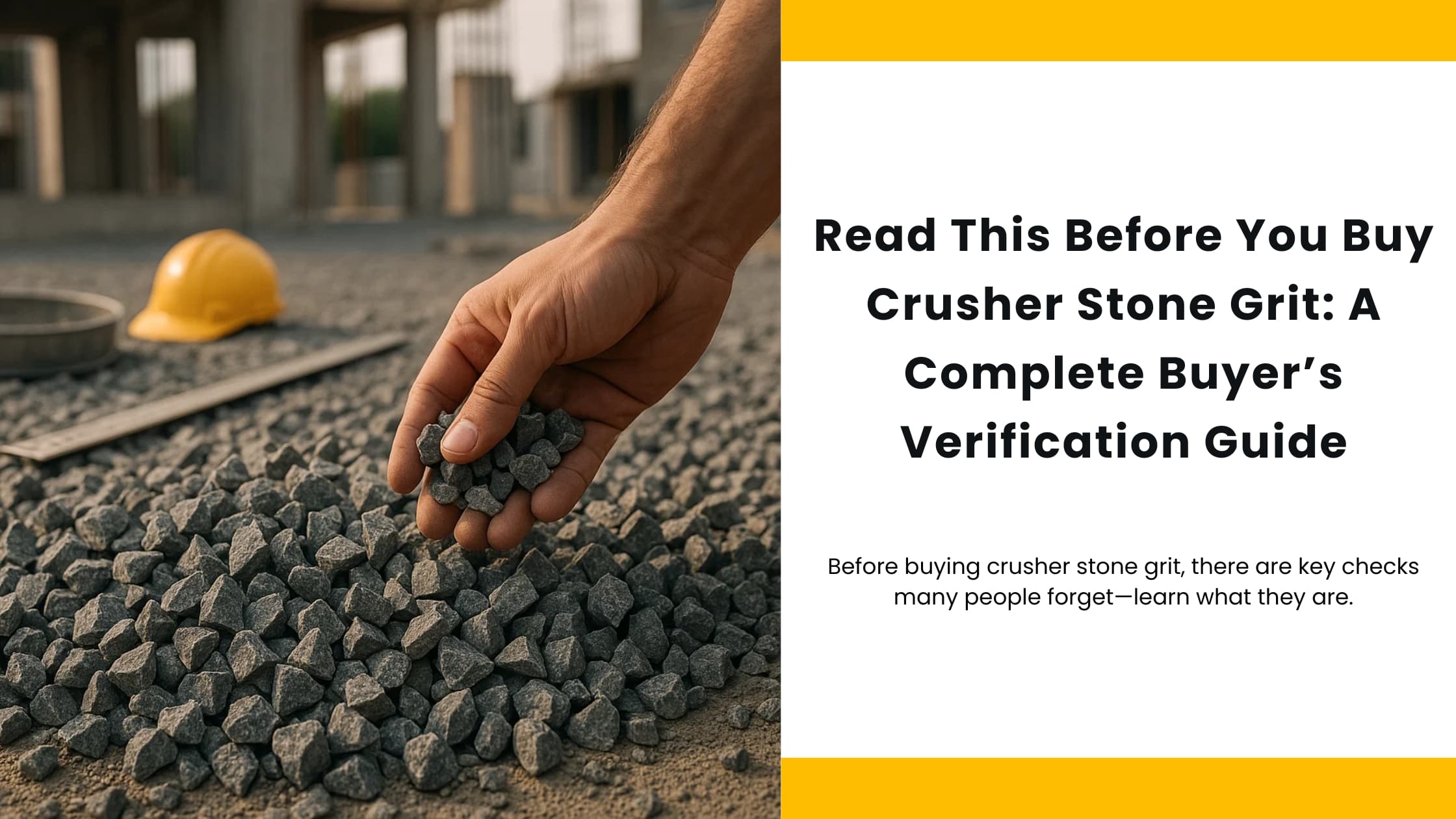
Read This Before You Buy Crusher Stone Grit: A Complete Buyer’s Verification Guide

Many people think that to buy crusher stone grit is simple. You order material, the truck arrives, and the work begins. But in reality, choosing the wrong grit can quietly damage your entire construction project. Poor-quality aggregate leads to weak concrete, cracks in structures, and early repairs. Unfortunately, most buyers only realize the problem after the concrete has already hardened. This guide is created for contractors, engineers, builders, and even house owners who want to avoid costly mistakes. If you are planning to buy crusher stone grit, this verification checklist will help you inspect quality before you pay for problems that appear later.   What Makes Crusher Stone Grit a Critical Construction Material? Crusher stone grit is not just filler material. It plays a major role in the strength of concrete, foundation stability, and long-term durability. Grit is used in: RCC structures  Columns and slabs  Base layers and flooring  Foundations and road beds  When the quality is poor, concrete becomes weak from inside. Even good cement and steel cannot compensate for bad aggregate. The truth is simple: Your structure is only as strong as your aggregate quality.   Step-by-Step Buyer’s Verification Guide This is the most important section. Follow these checks every time you buy crusher stone grit — for both large and small projects.   Check Particle Shape & Angularity Good crusher grit should be sharp, angular, and rough-edged. This helps cement grip the surface strongly. Bad grit looks: Rounded like river pebbles  Flat and flaky  Long and thin instead of cubical  Why this matters: Angular stones lock together better and make concrete stronger.  Flaky or rounded particles reduce bonding and create weak gaps in concrete.  Simple check: Rub stones together in your hand. If they feel slippery and smooth, quality is low.   Verify Cleanliness & Dust-Free Material Dust may look harmless, but it is one of the biggest threats to concrete strength. Excess dust: Reduces cement bonding  Increases water demand  Creates weak layers inside concrete  On-site test: Take a handful of grit and shake it. If a dust cloud rises, the material is dirty.  Another test: Put some stones in a bucket of water. If water becomes muddy, the material needs washing. Inspect Size Uniformity (Gradation Basics) Gradation means the correct mix of different stone sizes. Good grit contains: Small particles to fill gaps  Medium stones for density  Larger particles for strength  Bad grit shows: Only fine powder  Random oversized stones  No balance between sizes  Why this matters: Uneven size leads to air pockets in concrete. This means less strength and more cracks. Visual test: Spread some grit on the ground and observe. If sizes look balanced and mixed evenly, it is good.   Check for Moisture Levels Some suppliers add water to increase weight during sale. Wet heaps also hide actual quality. Problems caused by excess moisture: Inaccurate mix ratios  Higher cement requirement  Lower strength output  Easy check: Grab a handful tightly. If water drips or the material sticks together like clay, it’s too wet.   Demand Basic Lab Test Reports (Even for Small Purchases) Even small buyers should demand test reports. These are not just for large projects. Request tests like: Crushing value – Shows how much load grit can bear  Impact value – Tells resistance to sudden pressure  Specific gravity – Indicates stone density  Water absorption – Reveals quality and porosity  Sieve analysis – Confirms size distribution  Why this helps: These reports reveal whether the stone came from a strong rock source or weak one. No reports = unknown quality.   Check Material Hardness & Strength Indicators Not all stone is the same. Weak stones: Break easily  Turn dusty when struck  Feel powdery  Strong stones: Are hard  Make sharp sound when hit together  Retain shape  Quick test: Hit two stones together. If they crack easily, reject the batch.   Verify Supplier Authenticity A trusted supplier is as important as good material. Ask: How long they’ve been in business  Whether quality stays the same every batch  If site visits or sample checks are allowed  If loading photos/videos are provided  Whether test reports are available on demand  A genuine crusher stone grit supplier welcomes verification, A risky one avoids questions.   Check Truck Load Accuracy Many buyers unknowingly receive less material than paid for. Before unloading: Note truck weight  Verify challan entries  Ensure proper weighment  Check if truck floor is empty beforehand  Underloading quietly increases your cost per ton.   Ensure Material Matches Your Mix Design Different works require different grit sizes. For example: Framework needs finer control  Foundations require strength-focused aggregate  RCC needs controlled gradation  Using wrong size leads to: Poor bonding  Higher cement usage  Weak concrete strength  Always confirm grit size matches your design.   Pre-Delivery Checklist for Buyers Before delivery, confirm: Delivery time  Correct truck type  Clean vehicle bed  Covered load  No foreign material mixed  If material arrives dirty or wet, reject it immediately.   Common Red Flags Buyers Should Never Ignore Wet, heavy-looking grit – May be water-loaded  No test reports – Quality cannot be trusted  Uneven color – Indicates mixed stone  Too much powder – Reduces concrete strength  Supplier avoids questions – Signals risk  These signs usually mean hidden future damage.   Why Proper Verification Saves Money & Prevents Repairs Bad grit creates: Cracks in slabs  Weak foundations  Low load-bearing strength  Increased rework  Project timeline delays  Today’s savings become tomorrow’s loss. Using verified crusher stone grit protects: Safety  Structure life  Budget  Peace of mind Final Buyer’s Checklist  Before you buy crusher stone grit, save this list: ✅ Check shape and hardness  ✅ Inspect cleanliness  ✅ Verify moisture  ✅ Confirm size consistency  ✅ Demand test report  ✅ Verify load accuracy  ✅ Inspect supplier reputation  ✅ Confirm mix design match  ✅ Check delivery condition  Conclusion Buying crusher stone grit without verification is like building blind. Strong structures do not begin with cement — they begin with quality aggregate. Follow this guide every time: Ask questions. Inspect carefully. Demand proof. For best results, always choose verified suppliers who provide tested, consistent materials. Your

Editor
crusher stone grit sizes || 40mm Crusher Stone Grit || 20mm Crusher Stone Grit || 12mm Crusher Stone Grit || 6mm Crusher Stone Grit

Blog

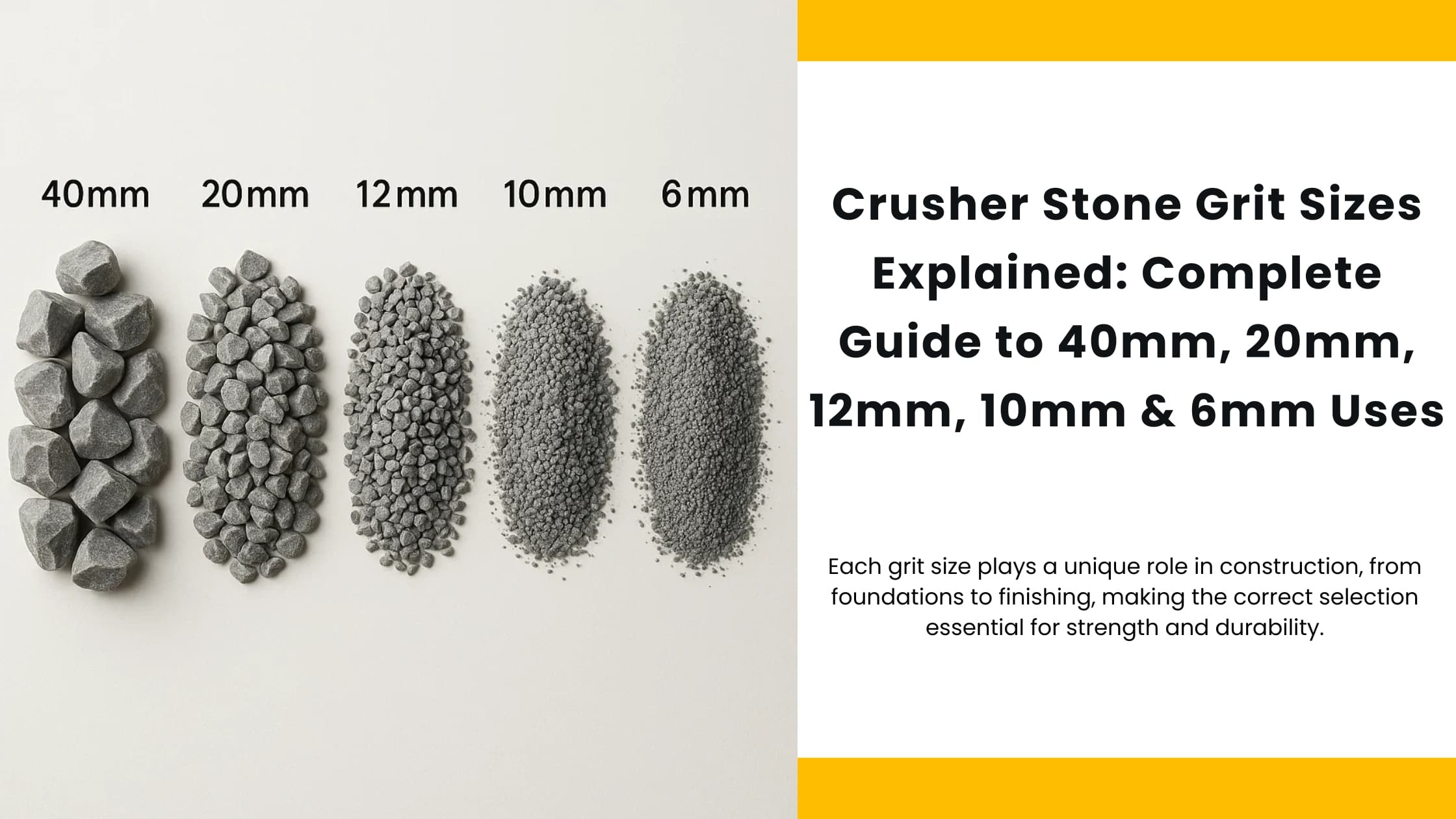
Crusher Stone Grit Sizes Explained: Complete Guide to 40mm, 20mm, 12mm, 10mm & 6mm Uses

Crusher stone grit—often referred to as construction aggregate—is a crushed stone material used in concrete, foundations, road layers, and various structural applications. It is produced by crushing large stones into specific sizes that meet engineering requirements. The size of the grit matters because every construction activity needs a particular particle size for strength, stability, and workability. Bigger stones improve load-bearing capacity Medium sizes ensure good compaction Smaller sizes help in smooth finishes and dense concrete Understanding various grit sizes helps builders, engineers, and contractors choose the right material for each task.   1. Detailed Explanation of Each Crusher Stone Grit Size 40mm Crusher Stone Grit What 40mm size means These are coarse aggregates sized around 40 millimetres—large, strong, and primarily used where high load-bearing strength is required. Common Applications Base layers for roads and highways Railway ballast (in some cases) Foundation fillings for heavy structures Under-layer for RCC footings Drainage layers Benefits Excellent load distribution Strong interlocking for stability Allows water movement, improving drainage Ideal for deep foundation filling When NOT to Use 40mm Grit Not suitable for RCC slabs Not recommended for beams and columns Avoid in flooring or plaster-concrete mixes 20mm Crusher Stone Grit What 20mm size means A standard aggregate size used in most structural concreting works. Typically 16–20 mm clean and angular stones. Construction Applications RCC slabs Columns and beams Footings Pathways and general concrete work Paver block manufacturing (base concrete) Benefits Excellent strength for structural concrete Good compaction without voids Ideal balance between workability and load-bearing When NOT to Use 20mm Grit Thin flooring layers Fine finishing surfaces Micro concrete or repair mortar 12mm Crusher Stone Grit What 12mm size means Medium-sized aggregate used where smoother concrete and better finish is required. Construction Applications Residential slabs Walkways Light foundation concrete Pathway concreting Paver block top-layer concrete Benefits Provides smoother finish Improves workability of concrete Suitable for thinner sections When NOT to Use 12mm Grit Heavy-duty foundations High-strength columns/beams Road base work 10mm Crusher Stone Grit What 10mm size means Small-sized aggregate commonly used in fine concrete mixes and detailed construction work. Construction Applications Floor concrete Plaster base concrete Small-section RCC Precast concrete items Paver block bedding Benefits High workability Smooth finish Good bonding in thin concrete sections When NOT to Use 10mm Grit Heavy RCC structures High-load foundations Road compaction layers 6mm Crusher Stone Grit What 6mm size means Fine aggregates typically used where dense, smooth mixtures are required. Construction Applications Interlocking tile bedding Paver block bedding Pathway finishing Decorative landscaping Thin topping layers Benefits Excellent for dense compaction Smooth surface finish Easy spreadability Useful for aesthetic and non-load applications When NOT to Use 6mm Grit Structural concrete of any type Load-bearing foundations Road base layers 2. Comparison Table: Crusher Stone Grit Sizes Size Best Use Load-Bearing Capacity Workability Suitable For 40mm Foundations, roads, drainage Very High Low Road base, footings, heavy foundations 20mm RCC, beams, slabs High Moderate Structural RCC, columns, beams, slabs 12mm Light concrete, residential slabs Medium High Light RCC, pathways, pavers 10mm Flooring, precast, finishing concrete Medium-Low Very High Floors, thin RCC, precast elements 6mm Paver bedding, landscaping Low Excellent Paver bedding, tiles, decorative work   3. Engineering Perspective How grit size affects strength Larger aggregates distribute loads better Smaller aggregates fill gaps, improving density Proper gradation improves the concrete’s overall compressive strength Workability of concrete Small-sized grit increases workability Large-sized grit may make concrete stiff Ideal mixes use a combination of sizes for balance Drainage performance Bigger particles create channels for water flow Used in road bases and foundation fillings Prevents waterlogging and soil weakness Interlocking and compaction Angular stones interlock better than rounded stones Larger grit increases stability in foundation layers Smaller grit compacts easily, creating a dense surface 4. How to Choose the Right Grit Size For RCC Slabs Ideal: 20mm Optional for thin slabs: 12mm For Columns & Beams Use 20mm for maximum structural strength For Road Construction Base layer: 40mm Top layer: 20mm For Foundation Bases Use 40mm for deep foundations Secondary layer: 20mm For Landscaping Decorative finish: 6mm Pathway concrete: 12mm For Paver Block Bedding Preferred: 6mm / Quarry dust-free fine grit 5. Quality Checkpoints When Buying Crusher Stone Grit 1. Angular Shape Angular stones interlock better Avoid round river stones for concrete work 2. Cleanliness No clay, dust, or soil contamination Clean aggregates improve bonding 3. Proper Gradation Balanced mixture of particle sizes Ensures durability and strength 4. Meets Indian Standards For construction aggregates, IS 383:2016 defines: Size tolerance Shape Water absorption Density Flakiness and elongation index 5. Hardness & Durability Stones should be: Hard Weather-resistant Not flaky or elongated 6. Common Mistakes to Avoid Using the Wrong Size for RCC Using 40mm in slabs reduces compaction Using 6mm in RCC reduces strength Mixing Dust with Grit Excessive dust weakens concrete Reduces bonding Poor Compaction Leaves voids Reduces load-bearing capacity Buying Untested Material Non-graded grit leads to inconsistent strength Always choose verified suppliers and tested aggregates Conclusion Choosing the correct crusher stone grit size is essential for achieving structural strength, long-term durability, and safe construction performance. Each grit size—40mm, 20mm, 12mm, 10mm, and 6mm—has a distinct purpose in the construction ecosystem. With the right selection, proper gradation, and verified quality, builders can ensure stronger foundations, better RCC structures, improved workability, and long-lasting results in every project. For builders who want dependable, well-graded aggregates for any type of construction work, Raj Mineral offers a complete range of crusher stone grit sizes backed by consistent quality and trusted performance.

Editor
Smart City Development in India || Smart city Development || Building Materials || Sustainable Construction

Blog

How Raj M-Sand and Crusher Stone Grit Are Powering Smart City Development in India

India’s Smart City Mission is reshaping urban development with a focus on better infrastructure, cleaner environments, digital systems, and improved quality of life. Whether it is housing blocks, commercial corridors, public transport routes, or drainage and stormwater networks, every part of this transformation depends on strong construction foundations. And behind every solid structure is a careful choice of building materials. Project stability, durability, and sustainability all begin with selecting materials that are consistent, reliable, and suited for large-scale construction. Among the materials increasingly shaping modern urban projects are M-Sand and Crusher Stone Grit. These two play a central role in delivering structural strength while also supporting environmental balance and long-term cost efficiency. Together, they are helping build the backbone of Smart City infrastructure across India. What Is M-Sand and Why It Matters M-Sand (Manufactured Sand) is produced by finely crushing hard stone in a controlled environment, ensuring uniform particle size and minimal impurities. Unlike natural river sand—which forms slowly and varies in texture— M-Sand is processed to meet specific grading and quality standards. Why M-Sand Is Preferred in Modern Construction Uniform Grain Structure The particles of M-Sand are consistent, resulting in improved bonding in concrete and plaster work. This delivers better structural strength and smoother surface finishes. Reduced Environmental Impact River sand extraction damages riverbeds, alters water flows, and harms ecosystems. Using M-Sand helps reduce pressure on natural resources, contributing to more responsible development practices. Reliable Supply for Large Projects M-Sand can be produced continuously and in large volume, ensuring steady availability for Smart City projects where material supply must be uninterrupted. High Overall Construction Quality Because M-Sand contains fewer impurities and is precision-graded, it provides stable concrete mixes, excellent strength, and long-lasting performance—key needs for infrastructure built to serve future generations. Understanding Crusher Stone Grit Crusher Stone Grit refers to crushed stone grades that are screened into different sizes for use in structural layers and concrete mixes. Unlike smooth river gravel, these stones have angular edges. Key Characteristics Better Interlocking Strength The angular shape allows the grit particles to interlock tightly, providing higher compactness and load-bearing capacity. Durable Foundation Material This makes it ideal for use in high-traffic areas, large building foundations, and layered road construction. Common Uses in Smart City Infrastructure Application Purpose Road Base Layers Improves pavement stability and prevents surface cracking Drainage & Stormwater Channels Allows smooth water flow and reduces waterlogging Concrete Foundations Enhances strength of structural load-bearing areas Walkways & Pathways Maintains alignment and prevents tile shifting Crusher Stone Grit’s durability and performance make it a key building block for large-scale public and private projects. Role of M-Sand and Crusher Stone Grit in Smart City Development in India Smart City development emphasizes precision, sustainability, and long-term resilience. M-Sand and Crusher Stone Grit support these goals in different but complementary ways. M-Sand in Building Construction Used in concrete, mortar, and plaster for residential and commercial projects Ensures uniform texture across large construction surfaces Supports faster workability and consistent mix results Crusher Stone Grit in Infrastructure Works Forms the base and sub-base in road networks and transport corridors Strengthens footpaths, pedestrian zones, and cycle tracks Supports efficient drainage systems, reducing flood risks in dense urban areas Ensuring Quality and National Standard Compliance Both M-Sand and Crusher Stone Grit can be produced to specific grading standards, helping engineers and architects meet: Safety guidelines Structural reliability targets Long-term maintenance objectives Smart Cities prioritize structures that last—not just for today, but for future generations. Environmental and Economic Advantages Sustainable development is the foundation of Smart City planning. M-Sand and Crusher Stone Grit contribute to greener and more cost-effective construction in several ways: 1. Protection of Natural Resources M-Sand reduces dependency on river sand, helping protect river ecosystems and groundwater movement. 2. Lower Carbon Footprint Local production reduces long-distance transportation, which in turn reduces fuel use and emissions. 3. Stable Material Pricing Controlled production ensures steady supply and prevents sudden price hikes, which is important for budgeting in large public and private projects. 4. Efficient Use of Stone Resources By optimizing stone crushing processes, waste is minimized and usable material yield increases—supporting circular resource practices. India’s Smart City Vision and Material Innovation India’s Smart Cities are envisioned to be resource-efficient, well-planned, and resilient. The government has encouraged the use of processed and engineered construction materials to: Reduce dependency on natural sand Promote faster and more consistent construction quality Support long-term sustainability objectives M-Sand and Crusher Stone Grit align with this vision by offering reliable building performance at scale. They are supporting: Mass housing developments Urban road and transport corridors Smart water and drainage network systems Public utility and commercial building projects The future of Indian urban development depends on choosing materials that are high-quality, scalable, and environmentally responsible—qualities embedded in both M-Sand and Crusher Stone Grit. Conclusion Smart City development in India is built on strong foundations—both structurally and environmentally. Raj M-Sand and Crusher Stone Grit are more than just substitutes for traditional materials; they represent a progressive shift toward responsible, high-performance, and future-focused construction practices. Their advantages—uniformity, durability, availability, and sustainability—make them essential to building cities that are strong, efficient, and ready to meet the demands of tomorrow. As India continues to advance toward smarter and more sustainable urban spaces, Raj Mineral is playing a vital role in meeting the rising demand for dependable construction materials. Raj M-Sand and Crusher Stone Grit are already driving this transformation, offering the strength, consistency, and quality required to build infrastructure that stands the test of time. By choosing Raj M-Sand, builders and developers contribute to a future where innovation and environmental responsibility go hand in hand.

Editor
Crusher Stone Grit Walkways || Walkway Material || Safe Walkways || Anti-Slip Walkways

Blog

Why Crusher Stone Grit Walkways Are the Safest Choice for Slip-Free Surfaces

Walkways are more than just paths; they guide movement, connect spaces, and ensure accessibility in homes, gardens, parks, and commercial areas. But beyond aesthetics and functionality, one critical factor is often overlooked—safety. Slippery walkways can cause serious accidents, particularly during rainy weather or in high-traffic zones. Surfaces made of smooth gravel, polished tiles, or even certain types of concrete often lose traction over time, turning into potential hazards. That’s why choosing the right walkway material is crucial. Among the many options available, Crusher Stone Grit Walkways stand out as a material that balances safety, durability, and affordability, making them ideal for Safe Walkways. With its unique texture and structure, it provides excellent traction, reduces slip risks, and requires minimal maintenance. In this blog, we’ll explore what crusher stone grit is, why it’s considered one of the safest options for walkways, and how you can make the most of it for long-term, slip-free surfaces. What is Crusher Stone Grit? Crusher stone grit is made from crushed stones, usually granite, basalt, or other hard rock types. Unlike rounded gravel that is smooth to touch, crusher grit has angular edges created through the mechanical crushing process. Key Characteristics of Crusher Stone Grit: Angular Shape: The sharp edges interlock with each other, providing natural stability. Grain Size Variety: Available in different sizes, from fine grit to coarse particles, depending on the walkway requirements. High Density: Offers better compaction compared to loose, rounded stones. This unique combination makes crusher stone grit ideal for creating stable, anti-slip walkways. Unlike polished or smooth materials, it holds its position firmly underfoot, ensuring consistent traction whether it’s dry, wet, or muddy. Safety Benefits of Crusher Stone Grit Walkways One of the biggest advantages of crusher stone grit is its contribution to walkway safety. Here’s how it outperforms other materials when it comes to preventing slips and falls: 1. Superior Slip Resistance The angular edges of grit lock together, creating a textured surface. This structure increases friction, making it difficult for shoes, bicycles, or even strollers to slip. Ideal for areas prone to water exposure, such as garden paths, poolside walkways, or rain-soaked driveways. 2. Effective Drainage Water is one of the leading causes of slippery surfaces. Crusher stone grit naturally allows water to drain through the gaps instead of pooling on the surface. By reducing water accumulation, it prevents algae or moss growth, both of which make surfaces dangerously slick. 3. Stability in High-Traffic Zones Walkways in public gardens, schools, or community parks experience heavy use. Unlike tiles that become polished with use or concrete that cracks, grit maintains its rough, stable texture over time. Practical Example: Imagine a walkway in a park that gets wet after every rain shower. A tiled path may become slippery, posing risks for children or elderly visitors. A crusher grit walkway, however, provides firm footing even in wet conditions, drastically reducing the chance of accidents. Durability and Maintenance Advantages Safety isn’t just about preventing slips—it’s also about ensuring the surface remains stable and reliable for years. Crusher stone grit scores highly here too. 1. Long-Lasting Strength Resistant to weather changes, from heavy monsoons to scorching heat. Does not crack like concrete or break like tiles. Retains its structure even under continuous foot traffic. 2. Easy to Maintain Occasional raking keeps the surface even. Adding a fresh layer of grit every few years restores aesthetics and safety. No need for chemical treatments, unlike tiles that require anti-slip coatings. 3. Comparison with Other Materials Tiles: Attractive but become slippery when wet and costly to repair. Concrete: Durable but prone to cracks and moss buildup. Rounded Gravel: Cheap but unstable, often shifting underfoot. Crusher Stone Grit: Balanced, offering durability + slip-resistance + easy upkeep. Installation Best Practices for Safe Walkways Even the best material won’t perform well if poorly installed. Proper installation of crusher stone grit ensures maximum safety and longevity. Steps for Effective Installation: 1. Prepare the Base Layer Excavate the path area to the desired depth. Lay a compacted base of coarse gravel for drainage and stability. 2. Recommended Thickness Spread a 2–3 inch layer of crusher grit for footpaths. For driveways or heavy-use areas, a 4–6 inch layer is ideal. 3. Compaction Methods Use a plate compactor or roller to firmly press the grit. Proper compaction prevents loose shifting and ensures long-term grip. 4. Edging for Containment Install borders (bricks, concrete edges, or steel strips) to prevent grit from spreading. Edging keeps the walkway neat and safe. 5. Leveling and Finishing Ensure a slight slope for natural water runoff. Rake the top surface evenly for consistent traction. Following these steps guarantees that the walkway will not only look neat but also remain slip-free under all conditions. Cost and Value Considerations When it comes to walkway materials, cost is always a deciding factor. Crusher stone grit offers one of the best balances between affordability and long-term value. Lower Initial Costs: More budget-friendly than tiles, stone slabs, or stamped concrete. Reduced Maintenance Costs: Less prone to damage, requiring minimal repairs. Safety Savings: Fewer accidents mean reduced liability and healthcare costs in public or commercial areas. Over time, what seems like a simple choice of material translates into major savings in both money and effort. Conclusion: Choose Crusher Stone Grit for Slip-Free Safety Walkways are essential for both beauty and functionality, but safety should always come first. Crusher stone grit proves to be the ideal choice for creating slip-free surfaces—its angular texture offers excellent traction, its drainage prevents slippery puddles, and its durability ensures long-term reliability. Whether you’re a homeowner designing a garden path, a contractor building community spaces, or a landscaper working on large outdoor projects, this material delivers on every front—safety, durability, and cost-effectiveness. Ready to transform your outdoor spaces into safe and durable areas? Choose crusher stone grit walkways from Raj Mineral for unmatched quality and long-lasting performance. Our premium materials ensure slip-free surfaces, superior traction, and minimal maintenance. Whether it’s for garden paths, driveways, or commercial walkways, Raj Mineral delivers reliable

Editor
Tips to Maintain Fly Ash Bricks || Safe storage of fly ash bricks

Blog

Effective Tips to Maintain Fly Ash Bricks on Construction Sites

Fly ash bricks have become a cornerstone of modern construction, especially in projects that emphasize sustainability, strength, and cost-effectiveness. These eco-friendly bricks, made from fly ash, lime, and gypsum, are known for their uniform shape, high compressive strength, and ability to reduce plaster requirements. However, despite their durability, improper practices at construction sites often lead to unnecessary material loss. Breakage during transport, moisture absorption from poor storage, and careless handling are some of the most common problems. These issues not only increase costs but also affect the overall quality of construction. The purpose of this blog is simple: to provide contractors, site supervisors, and buyers with practical, real-world tips to maintain fly ash bricks effectively on-site. With the right handling, storage, and maintenance strategies, you can ensure durability, minimize wastage, and save significant costs in the long run. Why Maintenance of Fly Ash Bricks is Crucial Fly ash bricks are strong and reliable, but like any construction material, they require proper care to retain their benefits. On many sites, careless handling leads to cracks, chips, or moisture damage that could easily have been avoided. For instance, stacking bricks too high without proper support often causes breakage at the bottom layers, while exposure to continuous rain weakens their structure. Benefits of Proper Maintenance: Prevents Damage: Reduces material loss caused by breakage or erosion. Saves Costs: Fewer damaged bricks mean lower replacement expenses. Improves Durability: Ensures the bricks retain their designed strength during construction. Enhances Quality: Leads to stronger walls, reduced plastering, and long-term structural stability. Think of it this way: every damaged pallet of bricks is money wasted. Effective maintenance not only saves costs but also ensures that your construction project meets both safety and quality standards. Tips to Maintain Fly Ash Bricks on Site Handling is often where most damage occurs. From unloading trucks to moving bricks across the site, small mistakes can lead to significant losses. Here’s how to do it right: Proper Unloading Techniques Avoid dropping bricks directly from height during unloading. Use mechanical aids like forklifts, cranes, or hand trolleys wherever possible. Train workers to handle bricks carefully during manual unloading. Safe Lifting and Carrying Lift bricks with both hands, keeping them upright. Avoid carrying too many bricks at once to reduce the risk of slips or drops. Workers should wear gloves to prevent cuts and provide better grip. Stacking During Movement Transport bricks on flat, stable surfaces to prevent tilting or falling. Use wheelbarrows or trolleys for short-distance movement across uneven ground. Safety Precautions for Workers Provide protective equipment like helmets, gloves, and safety shoes. Train teams in correct lifting techniques to avoid back injuries. Pro Tip: Always designate a safe unloading and stacking zone near the construction site to minimize unnecessary movement. Storage Best Practices on Construction Sites Safe storage of fly ash bricks plays a major role in maintaining their durability. Poor storage is often the biggest reason behind water damage, cracks, or weakening of the material. Guidelines for Proper Storage: Prepare a Solid Base Always store bricks on a raised, dry platform. A wooden pallet, stone base, or plastic sheet prevents direct contact with soil and moisture. Stacking Height and Method Do not stack bricks higher than 6–7 feet to avoid pressure cracks in lower layers. Arrange them in a zig-zag or crosswise manner to provide extra stability. Protection from Weather To ensure the safe storage of fly ash bricks, cover stacks with waterproof sheets or tarpaulins to prevent rain damage. During extreme heat, ensure the bricks are shaded to avoid surface cracks from prolonged exposure. Separate Storage Areas Keep new bricks separate from damaged ones. Clearly mark areas for ready-to-use and stored materials. By following these practices, you not only prevent damage but also ensure the bricks remain ready-to-use without additional preparation or rejections. On-Site Maintenance & Quality Checks Regular inspections are just as important as initial storage and handling. Bricks can develop issues even after careful storage if not checked frequently. How to Maintain Bricks on Site: Routine Inspection: Check for cracks, chips, or moisture patches weekly. Segregation of Damaged Bricks: Immediately remove damaged bricks from the main stack to prevent confusion during construction. Keep Bricks Clean: Dust and dirt buildup can reduce bonding strength with mortar. A light cleaning before use ensures better adhesion. Moisture Monitoring: Ensure tarpaulins or covers are intact and water isn’t seeping through. These simple yet effective practices allow supervisors to maintain high-quality standards throughout the project lifecycle. Cost and Time Benefits of Proper Maintenance One of the biggest advantages of maintaining fly ash bricks properly is cost-effectiveness. Reduced Breakage: Minimizes the need to purchase extra bricks to cover losses. Lower Labour Costs: Proper handling reduces time spent re-stacking or clearing broken pieces. Efficient Workflow: With well-maintained materials, work progresses faster without interruptions. Fewer Delays: Moisture-damaged bricks often need drying time, which slows down construction. Preventing this saves days on the project timeline. Even a 5–10% reduction in brick wastage can translate into thousands of rupees saved on medium to large construction projects. Conclusion: Smart Maintenance for Stronger Projects Fly ash bricks are among the most reliable and eco-friendly materials for modern construction. But to get the best out of them, proper handling, storage, and maintenance practices are essential. By reducing breakage, protecting from moisture, and ensuring regular inspections, contractors and supervisors can save costs while maintaining project quality. If you’re looking for high-quality fly ash bricks, trust Raj Mineral for durable, eco-friendly, and cost-effective solutions. Connect with us today to make your construction project stronger and more sustainable.

Editor
Fly Ash Bricks || Moisture-resistant bricks || Benefits of fly ash bricks || Eco-friendly bricks

Blog

Why Fly Ash Bricks Are Best for Humid & Rainy Conditions

Building in humid and rainy regions comes with unique challenges. Constant exposure to moisture can weaken walls, cause dampness, and lead to problems like mold growth, mildew, and structural decay. Traditional clay bricks often fail under these conditions, resulting in costly repairs and frequent maintenance over time. Homeowners and builders working in wet climates face the persistent challenge of keeping structures durable and safe. This is where moisture-resistant bricks become essential. Known for their durability, eco-friendly nature, and long lifespan, these bricks provide a reliable solution for construction in areas with high humidity and rainfall. Their unique properties make them ideal for creating structures that are not only strong but also resistant to dampness and environmental stress. Understanding Humidity and Its Impact on Buildings Humidity refers to the presence of moisture in the air. In regions with high rainfall or consistent dampness, this moisture gradually penetrates building materials, causing several problems: Damp walls – Water seeps through porous materials, leaving visible patches, stains, and sometimes peeling paint. Mold and mildew – Excess moisture encourages fungal growth, which can affect both health and indoor air quality. Structural weakening – Repeated water exposure reduces the strength of traditional clay bricks, making walls less stable and potentially unsafe over time. For builders and homeowners, these issues mean higher repair costs and shorter building lifespans. Choosing the right durable building material is the first step in avoiding such costly consequences and ensuring long-term structural integrity. What Makes These Bricks Ideal for Moist Conditions These eco-friendly bricks are manufactured by combining fly ash (a byproduct of coal combustion) with cement, sand, and water. Their composition provides several advantages for damp-proof construction: Low porosity – These bricks absorb significantly less water compared to clay bricks, reducing the risk of dampness. High density – Their compact structure prevents water seepage and enhances strength. Thermal resistance – Keeps interiors cooler and more comfortable even in humid climates. Uniform shape and smooth finish – Ensures tight masonry, minimizing gaps where moisture could penetrate. Compared to traditional red bricks, this sustainable building material has a much lower water absorption rate, typically around 10–12% versus 20% for clay bricks, making it ideal for rainy and humid regions. Benefits in Humid & Rainy Areas 1. Long-Term Durability This durable building material is stronger than traditional clay bricks. Its wear-resistant properties ensure that walls can withstand long-term exposure to water without deteriorating, making it a reliable choice for both residential and commercial construction. 2. Resistance to Water Seepage Thanks to their low absorption rate, these moisture-resistant bricks prevent water from seeping into interiors, keeping walls dry and protecting structural elements from corrosion or weakening. 3. Low Maintenance and Cost-Effectiveness Buildings constructed with this material require fewer repairs related to dampness, cracks, or leakage. Over time, this translates into substantial savings on maintenance, making it a cost-effective solution for homeowners and contractors alike. 4. Environmental Benefits One of the main benefits of fly ash bricks is their contribution to sustainability. They recycle industrial byproducts, reduce the burden on coal power plants, and support eco-friendly construction practices, making them a green building material choice. 5. Better Aesthetic Appeal The uniform shape and smooth surface reduce plastering requirements, resulting in neat, clean walls with improved visual appeal. This makes structures look polished and professional while also saving time and labor during finishing work. In regions with frequent heavy rainfall, these advantages make these bricks the best choice for long-lasting, low-maintenance construction. Practical Applications This durable building material is versatile and can be used across various types of structures: Residential walls – Keep homes dry, strong, and free from mold. Boundary walls – Withstand years of rain and humidity without damage. Commercial buildings – Provide cost savings in large-scale projects, especially in wet climates. In coastal areas like Kerala or Goa, where rainfall is high, using moisture-resistant bricks ensures that buildings remain structurally sound, dry, and comfortable compared to constructions made with clay bricks. Tips for Effective Use To maximize the benefits of fly ash bricks, follow these construction best practices: Use the correct mortar mix (cement-sand ratio) to ensure strong bonding. Provide proper curing during construction for maximum strength. Avoid storing bricks directly on soil or in contact with water before use. Employ skilled masons familiar with handling these bricks to ensure proper installation. Following these tips guarantees durable, moisture-resistant, and long-lasting structures suitable for humid or rainy regions. Conclusion When building in humid and rainy areas, choosing the right material is critical. Fly ash bricks stand out as eco-friendly bricks that offer durability, moisture resistance, and sustainability. By protecting structures from dampness, reducing maintenance costs, and supporting green building practices, they provide exceptional value to homeowners, builders, and contractors. Looking to Build Strong, Durable, and Moisture-Resistant Structures? Choose Raj Mineral for premium-quality fly ash bricks and expert construction solutions. Whether it’s residential walls, boundary walls, or commercial buildings, our eco-friendly bricks ensure long-lasting strength, low maintenance, and superior performance even in humid and rainy conditions. Contact Raj Mineral today to get a quote and build smarter, stronger, and greener.

Editor
M-Sand || Manufactured Sand || Quality construction || Modern construction projects

Blog

Why Builders Are Choosing M-Sand for Quality Construction

The construction industry is evolving at a rapid pace, and so are the materials that power it. Builders today face multiple challenges—rising material costs, inconsistent quality, and environmental concerns around natural resources. Among these challenges, one reliable solution has emerged: Manufactured Sand (M-Sand). As a river sand alternative, this material is gaining strong acceptance across modern construction projects. Builders, contractors, and property developers are increasingly choosing it for its quality, cost-effectiveness, and sustainability. This blog explores why manufactured sand is becoming the preferred choice for quality construction. What is Manufactured Sand? Manufactured Sand, commonly known as M-Sand, is produced by mechanically crushing hard stones into fine particles. The sand is then processed, cleaned, and graded to match the standards required for construction. Unlike river sand, which varies in size and contains impurities, this alternative offers: Consistent particle size Controlled quality Better suitability for concrete and mortar In short, it is not just a replacement—it is an upgrade in many aspects of construction materials. Reasons Builders Prefer Manufactured Sand 1. Consistent Quality and Size One of the biggest advantages of this material is its uniform particle size, which plays a crucial role in ensuring high-quality construction. Natural river sand often contains unwanted elements like mud, clay, silt, and irregular grains that reduce the strength of concrete and affect the finish of plastering. With manufactured sand, builders get precisely graded particles produced under strict quality control. This consistency improves strength, results in smoother surfaces, better bonding, and minimal wastage during application. 2. Cost-Effectiveness The rising demand and limited availability of river sand have made it increasingly expensive and inconsistent in supply. For large construction projects, this directly increases the overall project budget. Manufactured sand, however, is produced in controlled environments, making it more affordable and readily available without compromising quality. Builders can save significantly on procurement, transportation, and wastage. Over time, these cost benefits add up, making it a practical and budget-friendly choice for both small-scale and large-scale projects. 3. Environmental Sustainability Excessive mining of river sand has caused severe environmental damage, including soil erosion, depletion of groundwater, and destruction of natural habitats. Governments and environmental organizations are increasingly discouraging its use. Manufactured sand, on the other hand, is created from hard stones through eco-friendly processes, reducing the pressure on natural resources. By choosing it, builders contribute to sustainable construction practices and align their projects with eco-conscious standards. 4. Enhanced Durability in Construction Thanks to its angular-shaped particles, manufactured sand bonds better with cement compared to the smooth, rounded particles of river sand. This improves the load-bearing capacity of buildings and minimizes cracks, seepage, or shrinkage over time. Whether it’s residential apartments, commercial complexes, or large infrastructure projects like highways and dams, the material provides long-term durability. Benefits in Construction Projects This alternative is not just about cost savings—it offers practical performance benefits too: Residential Projects: Smooth plastering and reliable strength for walls and floors. Commercial Buildings: Enhanced durability and reduced maintenance. Infrastructure Projects: Consistent quality for highways, bridges, and dams. Additional benefits include: Better workability with cement and water Reduced construction time due to consistency Long-term reliability with minimal structural issues Addressing Common Concerns Despite its growing popularity, some misconceptions about M-Sand still exist: “M-Sand is inferior to river sand.” ✔ Not true. M-Sand is lab-tested to meet construction standards and often performs better than natural sand. “It produces more dust.” ✔ Modern manufacturing ensures dust-free, clean, and ready-to-use sand. “It cannot replace river sand in premium projects.” ✔ M-Sand is already being used in top-tier infrastructure and housing developments, proving its reliability. Through rigorous quality checks and certifications, M-Sand has established itself as a trusted choice for builders. Conclusion The shift towards M-Sand reflects a larger change in the construction industry—builders are prioritizing quality, cost-efficiency, and sustainability. With its consistent quality, affordability, durability, and eco-friendly advantages, M-Sand is no longer just an alternative to river sand—it is the smarter choice for quality construction. Builders looking to ensure stronger, reliable, and future-ready structures should embrace Manufactured Sand for their projects. How Raj Mineral Supports Builders with M-Sand At Raj Mineral, the focus is on providing builders with high-quality Manufactured Sand that meets strict industry standards. The company ensures: Reliable Supply: Consistent availability for ongoing projects. Quality Assurance: Regular lab testing and grading checks. Builder Trust: Years of experience in delivering dependable construction materials. By supporting sustainable and modern construction projects, Raj Mineral plays an important role in helping builders achieve their goals without compromising quality or the environment. Contact us today to know how Raj Mineral can power your next project with reliable and eco-friendly M-Sand.

Editor
Smart Ways to Use Crusher Stone Grit

Blog

7 Smart Ways to Use Crusher Stone Grit in Landscaping

When it comes to landscaping, choosing the right material is just as important as the design itself. Among the various options, crusher stone grit stands out for its durability, affordability, and versatility. Whether you are planning a small home garden or a large commercial landscaping project, stone grit can add structure, beauty, and strength to your outdoor space. In this blog, we’ll explore seven smart ways to use crusher stone grit in landscaping, along with tips on how to choose the best quality materials for your project. 1. Pathways and Walkways Stone grit is one of the most popular choices for garden pathways and walkways. It creates a firm, non-slippery surface that blends naturally with greenery. Unlike tiles or concrete, grit paths allow water to seep through, preventing puddles and making them perfect for all-weather use. Another advantage of using crusher stone grit for pathways is its low maintenance and cost-effectiveness. It doesn’t crack like cement or need frequent repairs, making it a practical option for both residential gardens and large parks. The natural texture of grit provides excellent grip, ensuring safe walking even during the rainy season. Additionally, its rustic and earthy appeal complements any landscape design, from modern minimalist gardens to traditional courtyards, enhancing the overall beauty of the outdoor space. 2. Driveways and Parking Areas For heavy-duty areas like driveways, crusher stone grit provides strength and durability. It can withstand the constant weight of vehicles without developing cracks like concrete surfaces. Plus, its rough texture ensures better traction, reducing skidding during monsoon or winter seasons. Another big advantage of using stone grit for driveways and parking zones is its flexibility and long-lasting performance. Unlike rigid concrete, which can chip or break due to temperature changes, crusher grit adjusts well to different weather conditions, making it more durable in the long run. It also requires less investment compared to cemented driveways while offering easy repair options—simply adding fresh layers of grit can restore the surface. Additionally, stone grit provides a natural and stylish look, giving your driveway an eco-friendly finish that blends with the overall landscaping design. 3. Garden Borders and Edging If you want neat garden beds or lawn edges, crusher grit is an excellent choice for borders. It not only prevents soil erosion but also adds a clean, defined look to your landscape. The earthy tones of stone grit perfectly complement plants, flowers, and grass. One of the main benefits of using stone grit for edging is that it creates a natural barrier between different sections of your garden. This prevents grass or weeds from spreading into flower beds, reducing maintenance efforts. Garden borders made with grit are also highly durable compared to wooden or plastic edging, which may rot or get damaged over time. Additionally, crusher grit is available in different sizes and textures, giving homeowners and landscapers the flexibility to design both subtle and bold borders. Whether you want to highlight a flowerbed, outline a walkway, or separate decorative zones, stone grit brings structure, order, and long-term stability to your garden layout. 4. Base Material for Patios and Paver Blocks Before laying patio slabs, interlocking blocks, or tiles, a strong base is necessary. Crusher stone grit works as a stable foundation, ensuring long-lasting strength. It evenly distributes the load, minimizing chances of cracks or uneven settling. Another advantage of using stone grit as a base material is its excellent drainage capacity. Unlike plain soil, which can retain water and weaken the structure, grit allows rainwater to seep through, preventing waterlogging and maintaining the stability of patios and pavements. This makes it particularly useful in areas that experience heavy rainfall or fluctuating weather conditions. Moreover, crusher stone grit is compactable, which means it can be tightly packed to form a level, durable surface before the final layer of pavers or tiles is installed. By providing a reliable base, it increases the lifespan of patios, courtyards, and walkways while reducing future repair costs. 5. Erosion Control and Drainage In sloped gardens or areas prone to waterlogging, crusher grit helps control soil erosion and improve drainage. Its porous texture allows water to pass through, reducing surface runoff and keeping the soil in place. This makes it ideal for sustainable landscaping designs. An added benefit of using crusher stone grit for erosion control is its ability to stabilize weak soil structures. When applied in layers, grit acts as a protective cover that holds the soil together, preventing it from washing away during heavy rains. It is particularly effective around flowerbeds, retaining walls, and slopes where soil erosion is a common issue. Additionally, by improving water percolation, grit reduces the chances of root rot in plants, creating a healthier garden environment. Its durability ensures long-term protection, making it a smart choice for eco-friendly landscaping that balances beauty with functionality. 6. Decorative Ground Cover Stone grit can be used as a decorative element in landscaping. Spread across open spaces, it creates a rustic and natural look. You can mix it with pebbles or larger stones for a stylish aesthetic while keeping maintenance costs low. One of the best things about using crushed stone grit as ground cover is its versatility in design. It can be applied in garden corners, around trees, or between stepping stones to add visual interest while minimizing weed growth. Unlike grass or plants, which require constant watering and upkeep, grit offers a low-maintenance solution that still enhances the beauty of outdoor spaces. Its neutral tones work well with both modern and traditional landscape designs, making it a timeless choice. Additionally, decorative stone grit helps in controlling dust and mud, keeping outdoor areas clean and neat throughout the year. 7. Foundation for Outdoor Structures Planning to install a pergola, gazebo, or outdoor seating area? Crusher stone grit provides a strong foundation. It ensures stability and prevents structures from sinking or tilting, making it a practical material for long-term landscaping projects. Another advantage of using crusher grit as a base for outdoor structures is its ability to

Editor
Trends in Sustainable Construction || fly ash bricks || Interlocking Paver Blocks || manufactured sand || crusher stone grit

Blog

4 Powerful Trends in Sustainable Construction

As India witnesses unprecedented growth in urban and rural infrastructure, trends in sustainable construction have proven to be more than just a trend—they’re a necessity. Builders, architects, and homeowners now seek eco-friendly building materials to reduce environmental impact while enhancing efficiency. This shift is redefining the standards for construction material suppliers. With the growing demand for responsible construction, companies are pioneering the movement by offering innovative, sustainable products backed by decades of trust and expertise. Here are four powerful trends in sustainable construction that are reshaping the future of building. Trend 1: Eco-Friendly Building Materials Environmental consciousness is at the center of modern development. One of the most remarkable shifts is the adoption of materials that minimize the carbon footprint. Fly Ash Cemented Bricks have emerged as a game-changing alternative to conventional clay bricks. Unlike clay bricks—which involve topsoil depletion and significant CO2 emissions—fly ash bricks are formed using industrial waste, reducing landfill and pollution. Why Fly Ash Bricks Lead in Sustainability: Durability: High compressive strength ensures long-lasting structures. Thermal Insulation: Keeps interiors cooler, reducing energy usage for cooling. Resource Efficiency: Utilizes fly ash, a byproduct of thermal power plants, cutting waste. Trend 2: Use of Recycled Aggregates and M Sand The depletion of river sand poses both ecological and regulatory challenges. The rise of manufactured sand (M Sand) addresses these issues head-on. Produced by crushing hard granite stone, M Sand is a sustainable sand alternative that reduces riverbed exploitation, ensuring responsible resource use. Advantages of Manufactured sand: Reliable Quality: Uniform particle size leads to improved construction strength. Cost-Efficient: Locally manufactured, reducing both procurement costs and transportation emissions. Environmentally Responsible: Halts illegal mining and protects river systems. Trend 3: Modular and Smart Paving Solutions Urban spaces demand flexible and sustainable infrastructure. Interlocking paver blocks are transforming the way urban roads, walkways, and landscapes are built. Their smart design facilitates rainwater permeability, promoting groundwater recharge and reducing urban flooding. Key Benefits of Interlocking Paver Blocks: Water Permeability: Allows rainwater to filter through, supporting eco-friendly drainage. Easy Maintenance: Damaged blocks can be replaced individually, saving time and resources. Aesthetic Versatility: Wide range of sizes, colors, and patterns to suit any design. Reusability: Uplift and relay as urban needs change. Trend 4: Efficient Foundation Materials – Crusher Stone Grit No structure stands strong without a robust foundation. Crusher stone grit—another sustainable solution—offers superior load distribution and structural integrity. Made from crushing stone quarry waste, it recycles material that would otherwise clog landfills. Key Benefits of Using Crusher Stone Grit: Performance: Ensures optimal compaction for roads, foundations, and concrete mixes. Longevity: Enhances the lifespan and safety of constructed surfaces. Sustainability: Reduces dependence on newly quarried stone, supporting environmental conservation efforts. Why Choose Raj Mineral for Sustainable Construction Materials When you select Raj Mineral Udaipur, you partner with a construction material supplier renowned for integrity and innovation since the 1990s. Here’s why builders trust us: Local Manufacturing: Cuts transportation emissions, benefiting both your budget and the environment. Stringent Quality Standards: Products are manufactured to ISO benchmarks and undergo strict quality checks. Customer-Centric Approach: Reliable service, tailored solutions, and responsive support for every client. Commitment to Green Growth: Every Raj Mineral product is a step towards a sustainable future. Conclusion The future of construction in India lies in adopting sustainable materials and innovative methods that balance progress with planet care. Whether you are an architect seeking eco-responsible solutions, a builder aiming for durable results, or a homeowner committed to green living, Raj Mineral is your trusted partner. Choose Raj Mineral – where strength meets sustainability. Reach out today for product inquiries, expert guidance, or tailored solutions for your next project!

Editor
Call Now